

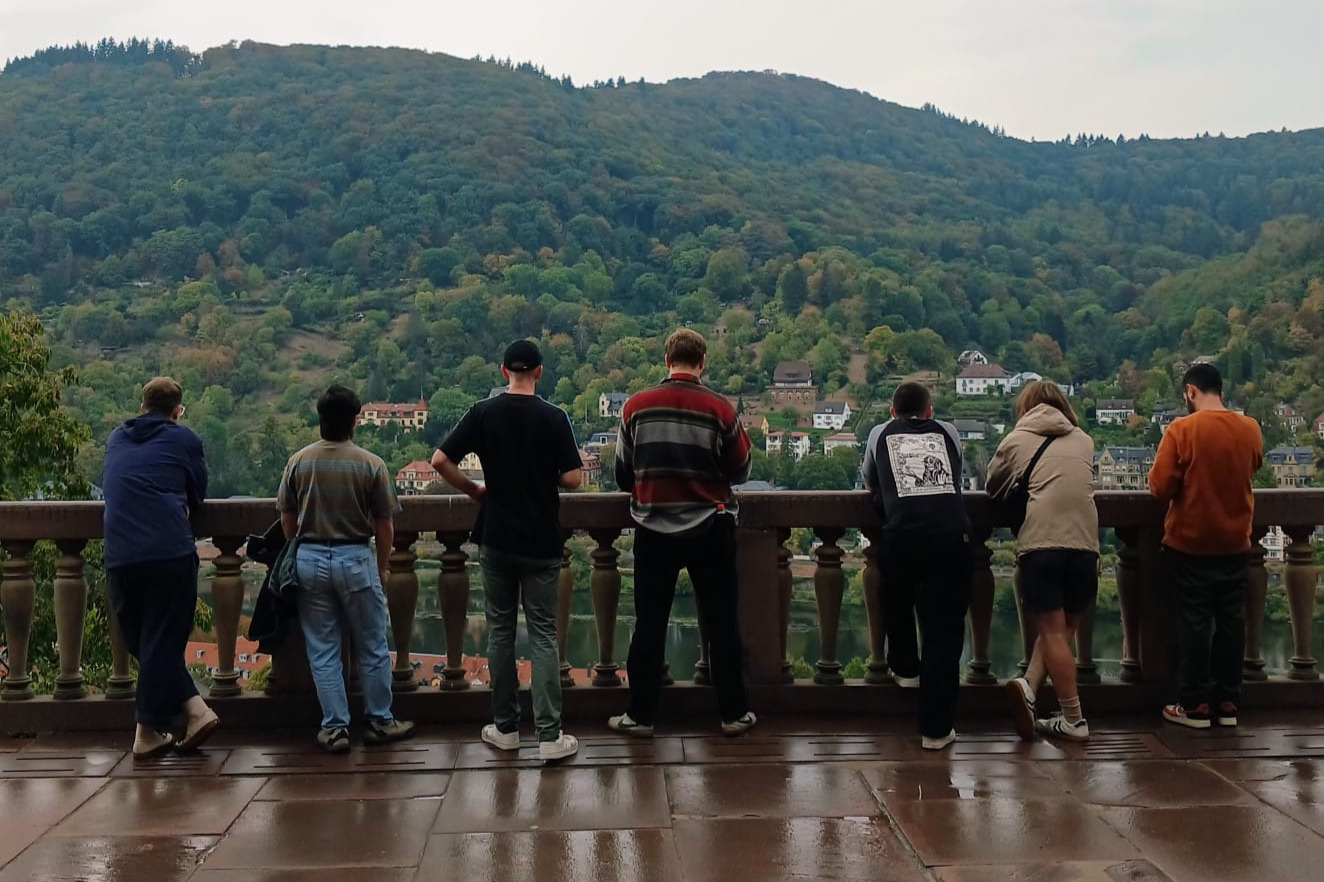
In what’s quickly becoming an annual event, we brought a load of our brewers together for a trip to Germany to give them a closer look at the malt and hops shaping their beers.
We know that one of the most interesting parts of the beer story for you as brewers is where the ingredients that make up your beer come from. As suppliers, we’re really lucky to work closely with the producers of some of the finest brewing ingredients in the world, and we’re in a fortunate position to follow ingredients from field to glass ourselves. It seems only fair then that we give you brewers the opportunity to peek behind the curtain once in a while too!
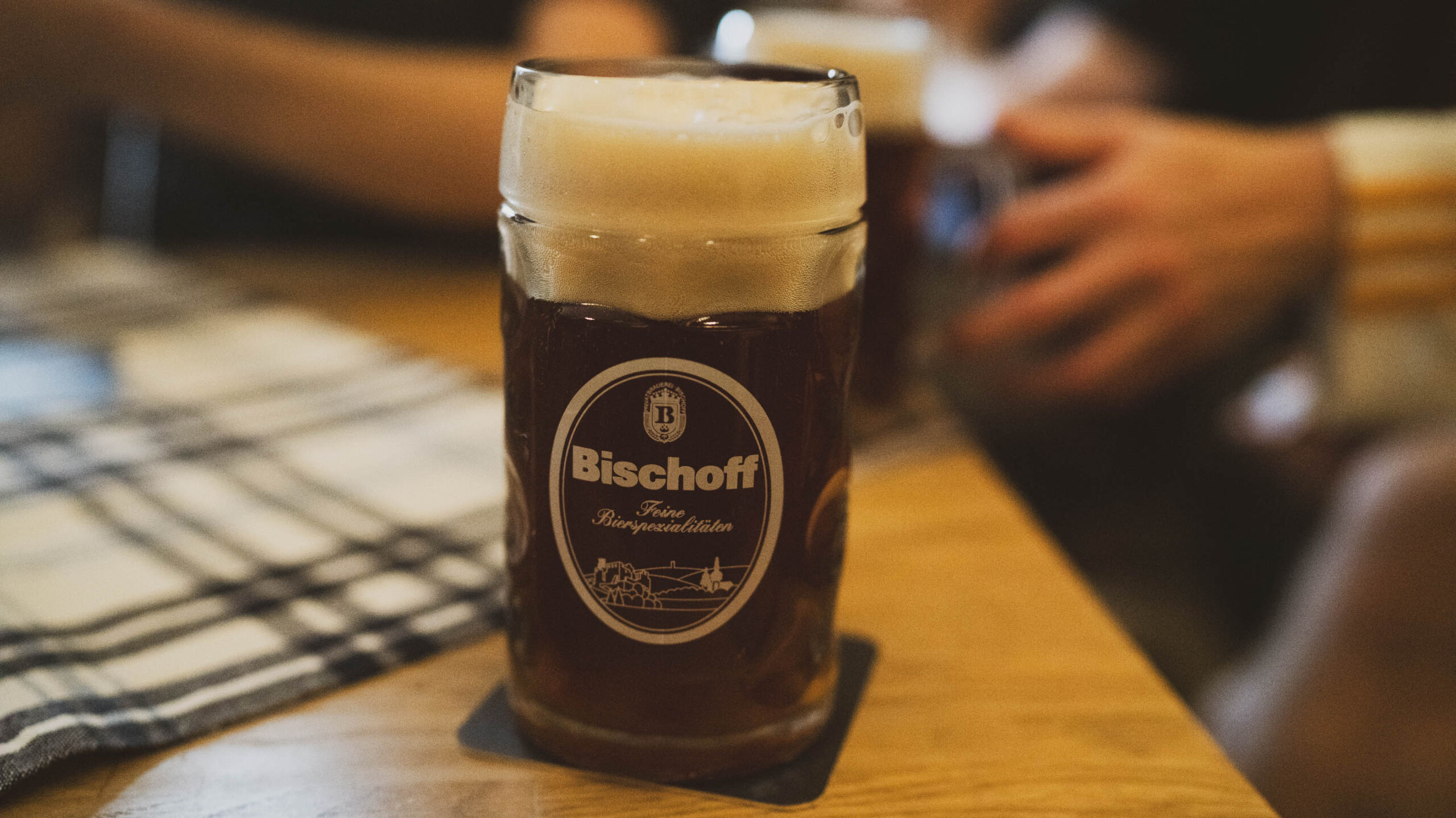 A pint from Privatbrauerei on the way to Ravensburg. Photo by Changmin Lee of Cloudwater Brewery.
This October, Loughran Brewers Select brought a group of brewers together for a trip to Germany.
Our gang comprised of Tristan Hembrow from Bristol Beer Factory, Martyn Lewis of New Bristol Brewery, Matthew Smith from Black Lodge Brewery, Unbarred Brewery’s Jordan Fancey, Karl Gowing from Wiper & True Brewery, Changmin Lee of Cloudwater Brew Co., Sean Forde from Sureshot Brewery, Jaime Lee (Campervan Brewery), Ben Hulse of Boundary Brewing, Charlie Barth (Wicklow Wolf), Marco Mammoli from Galway Bay Brewery, and Paul Bogan of Ri-Ra Brewing, as well as Jethro Holman, Robert Hamilton & Joshua Hampson from our team.
Whilst in Germany, we would visit our premium German malt supplier BESTMALZ, and our German hop producer BayWa, as well as one of their partner hop farms Locher Hopfen. Our goal (as well as drinking as many Augustiner Edelstoffs from the roadside petrol stations as possible) was to get a closer look at the people, processes and expertise behind the malt and hops our brewers are using every day.
Across the visits, the group explored malt production, rubbed and assessed hop samples, heard directly from the people working with these ingredients and, naturally, sampled plenty of excellent German beer along the way.
But the most valuable takeaways weren’t all found in the production facilities. Conversations between brewers, unexpected discoveries, and the opportunity to meet the people behind the ingredients made this an unforgettable trip for all of us, or as one colleague put it “the best thing we’ve ever done” (Marketing Department has now doubled the budget allocation for the Secret Santa gift they’ll receive this year).
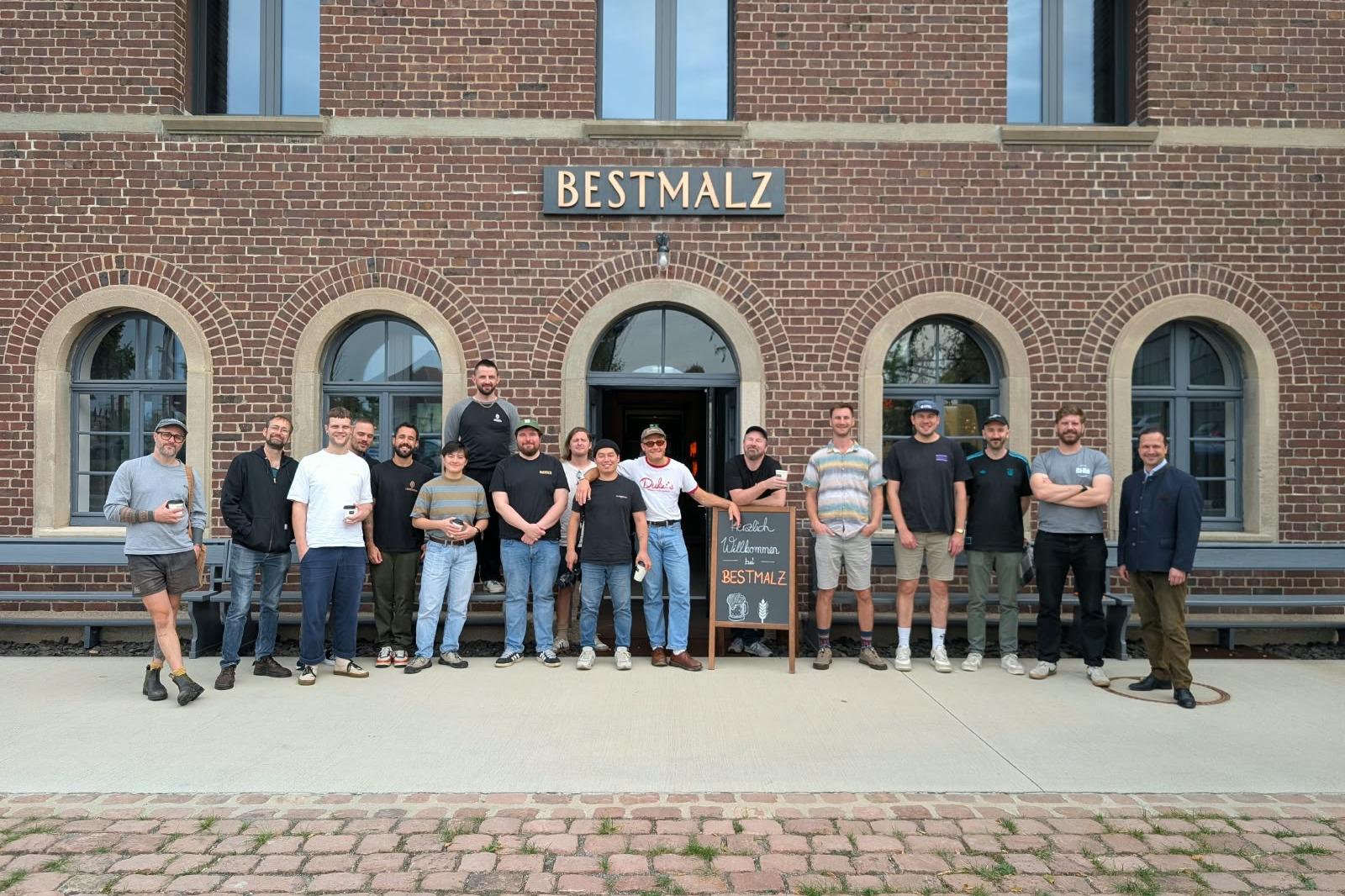 Our brewers with the Loughran Brewers Select team at BESTMALZ. L-R: Karl Gowing (Wiper & True), Martyn Lewis (New Bristol Brewery), Ben Hulse (Boundary Brewery), Charlie Barth (Wicklow Wolf Brewery), Marco Mammoli (Galway Bay Brewery), Jaime Lee (Campervan Brewey), Joshua Hampson (Loughran Brewers Select Ltd), Sean Forde (Sureshot Brewery), Jordan Fancey (Unbarred Brewery), Changmin Lee (Cloudwater Brewery), Jethro Holman (Loughran Brewers Select Ltd), Robert Hamilton (Loughran Brewers Select Ltd), Tristan Hembrow (Bristol Beer Factory), Jake Hiom (Siren Craft Brewery), Matt Smith (Black Lodge Brewery) & Paul Bogan (Ri-Ra Brewery).
Behind The Malt: Innovation at BESTMALZ
BESTMALZ are Loughran Brewers Select’s premium German malt partner, and have built a stellar reputation amongst brewers for providing not only exceptional lager malt, but also thanks to their popularity with pioneering brewers in the US, low colour ‘clean’ malt with a good diastatic power which provides the perfect base on which to ‘hang’ hops.
The visit to the BESTMALZ maltings in Kreimbach-Kaulbach offered an insight into the technology, precision and expertise involved in producing malt for brewers.
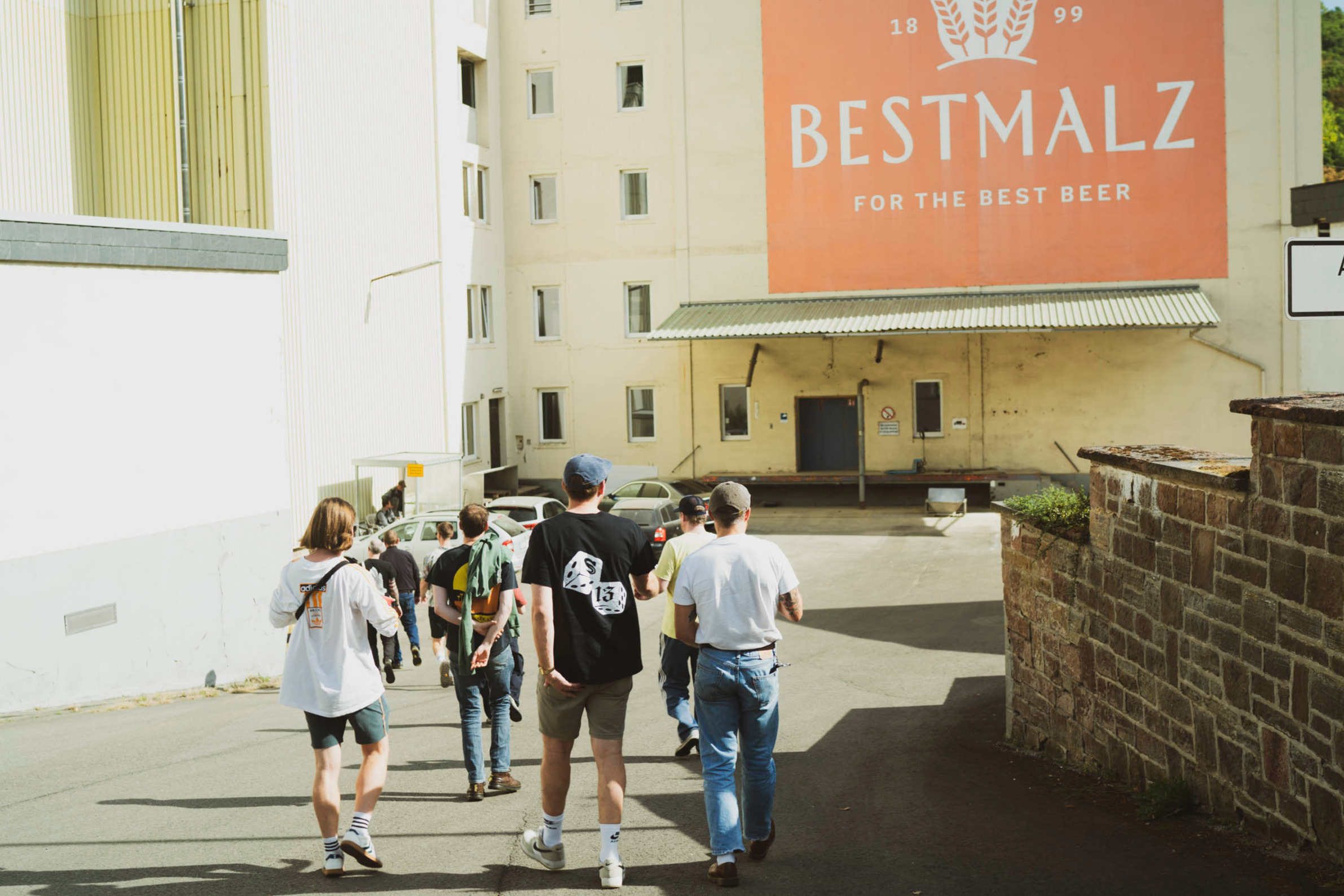 Kreimbach-Kaulbach Maltings. Photo by Jethro Holman.
Sureshot Brewing Co. use BESTMALZ in many of their beers and are already big fans, but for Head Brewer Sean Forde, one of the biggest surprises at the BESTMALZ maltings was the level of technology involved in small-batch malt production. It was a reminder that innovation in malting isn’t simply about scale, but also about the equipment and processes used to achieve consistent results.
For other brewers, the visit sparked ideas for their own recipes. The brand-new BESTMALZ NP Ultra-Pale Malt emerged as a particularly interesting talking point, with both Sureshot’s Sean, and Paul Bogan of Ri-Ra, keen to explore its potential in double and hazy IPAs.
For Sean, using ultra pale malt in DIPAs could offer a way to reduce colour pickup. Paul was similarly interested in trialing BESTMALZ BEST Heidelberg Pils and BESTMALZ BEST NP Ultra-Pale Malt in the Larkins line up – an offshoot sibling brand to Ri-Ra which allows them to produce some more experimental beers.
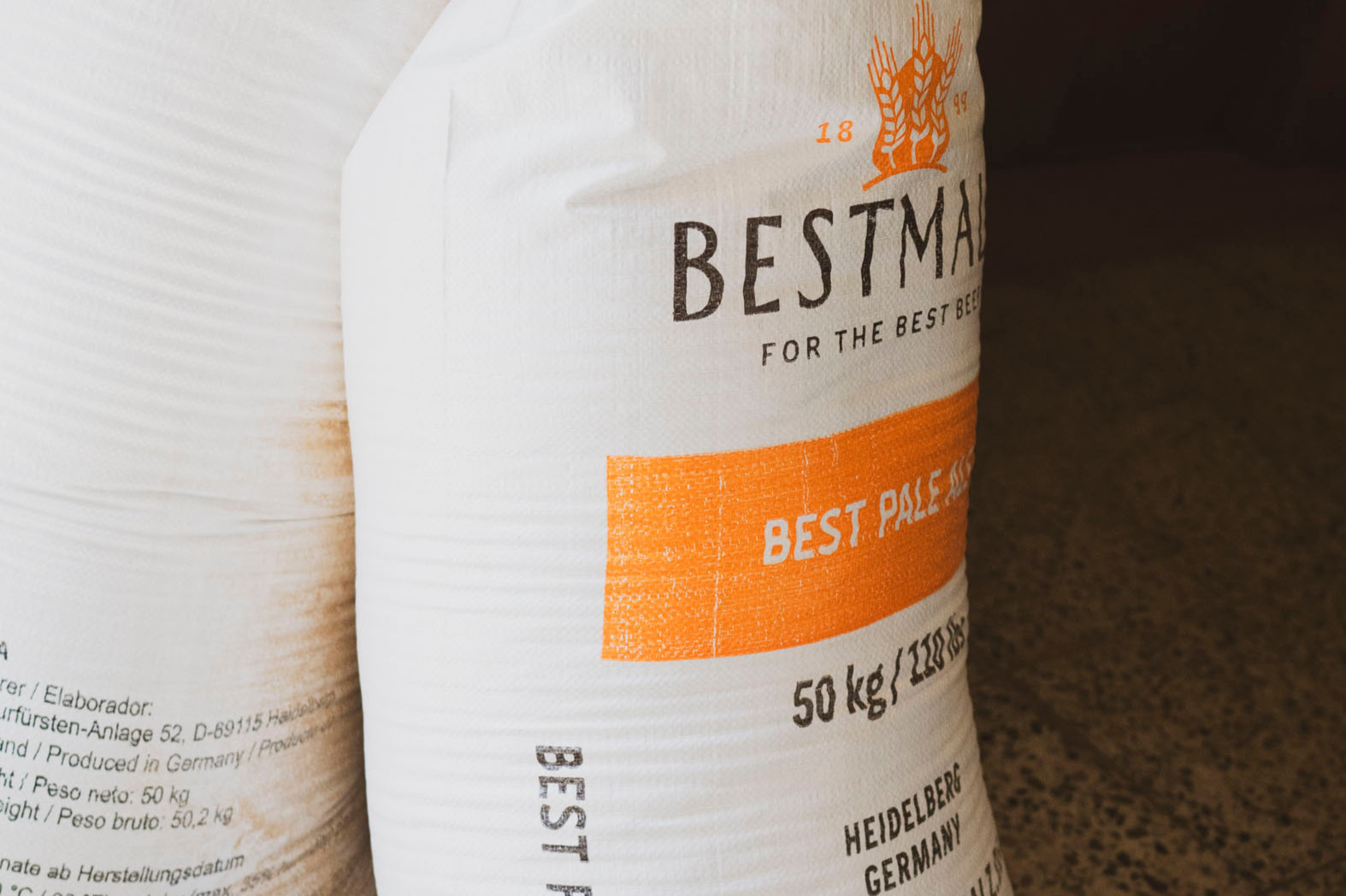 BESTMALZ BEST Pale Ale Malt Bags. Photo by Jethro Holman.
Martyn Lewis of New Bristol Brewery was also inspired to experiment, with BESTMALZ Ultra Pale – affectionately dubbed the “Jeffers Special” during the trip – firmly on his list.
Why the name ‘Jeffers Special’? It’s because the malt owes a certain part of the its existence to our Southern UK Sales Manager Jethro Holman, who made a special request of BESTMALZ as a favour to Left Handed Giant’s head brewer James Matamala.
Already strong users of BESTMALZ, Left Handed Giant wanted to know just how pale BESTMALZ could make a malt, and, after a call from Jethro, BESTMALZ replied “No Problem!” and BEST NP Ultra-Pale Ale was born. In comparison to BESTMALZ BEST Heidelberg – EBC of 2.9, BEST NP Ultra-Pale is even paler with an EBC of 2.3 whilst still fully compliant with Germany’s immensely strict Beer Purity Law (Reinheitsgebot) for malts – making it unique in the market.
Martyn was also keen to try the BESTMALZ BEST A-XL, named after BESTMALZ CEO and third-generation maltster Dr Axel Göhler, who proudly runs this family-owned business. BEST A-XL is a malt derived from an established German variety Alexis.
Although this is a light-coloured malt (2.5 – 3.2 EBC), BEST A-XL is a heavy hitter in terms of flavour, bringing distinctive malty tones to beer. For brewers, there’s a chance here to meet existing consumer demand favouring visually lighter beer but still be able to offer beers which pack a punch of malt flavours without sacrificing or masking the hops.
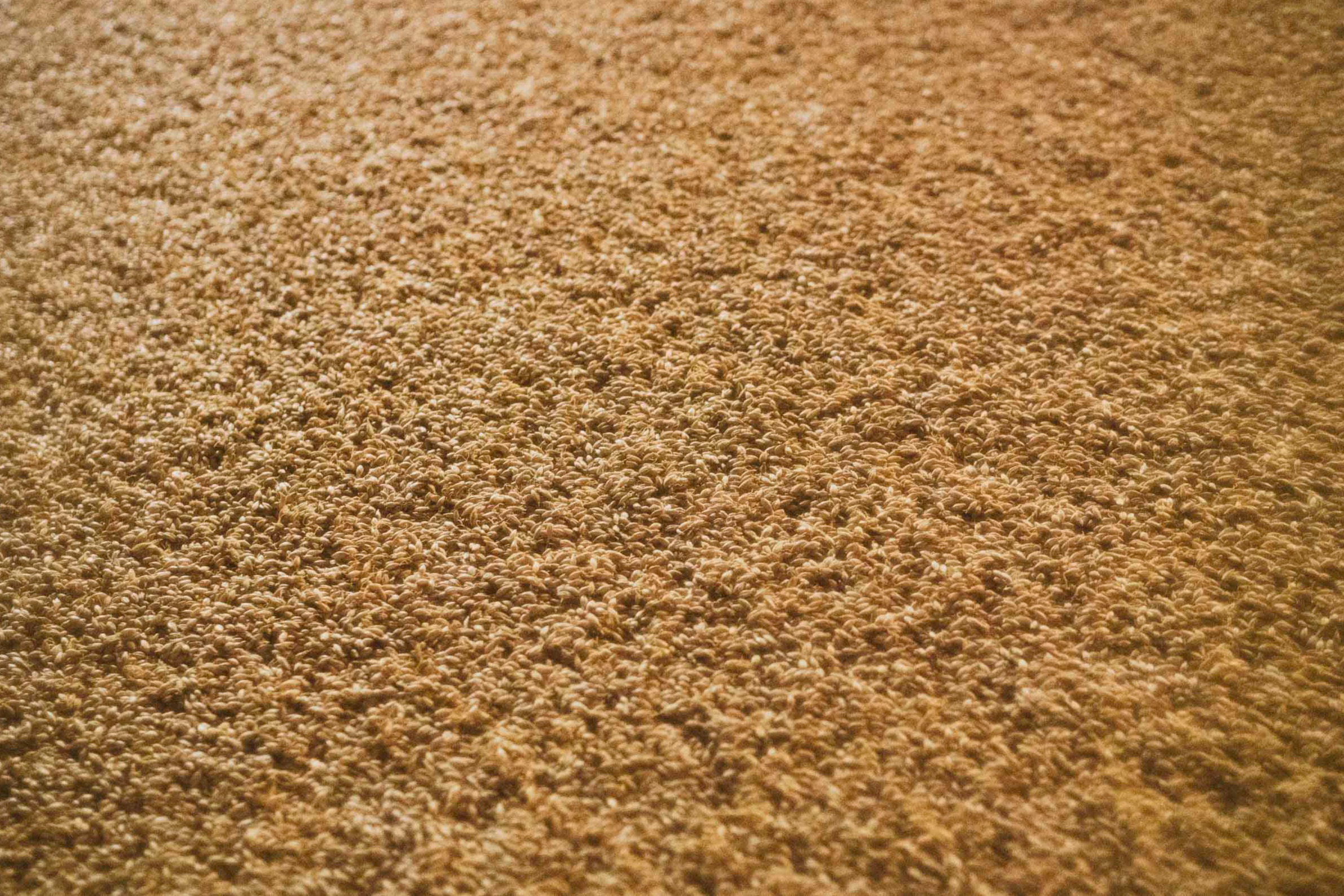 Photo by Changmin Lee of Cloudwater Brewery.
Being able to bring our customers over to Germany to meet the maltsters at BESTMALZ, and for the BESTMALZ team themselves to engage with some of the most respected breweries in the UK & Ireland is truly what this trip was about.
Watching the brewers get inspired by new ingredients and developments, and witnessing the passion behind every stage of the brewing process is why this trip, and our annual visit to Portland, Oregon for hop harvest, are both so valuable to us.
 Photo by Jethro Holman.
Getting Hands-On With Hops At BayWa
We’ve been working closely with BayWa since 2019 as our supplier of top-quality German hops. They’re one of Europe’s most prestigious agricultural companies, and a leading hop processor and merchant in Germany. BayWa has bases in Tettnang – a region with a worldwide reputation for superb aroma hops, and Hallertau, which is the largest hop growing region in Germany. BayWa supplies hops to some of our favourite German breweries (Augustina anyone?), as well as US icons like Firestone, Deschutes, PFreim, and Sierra Nevada.
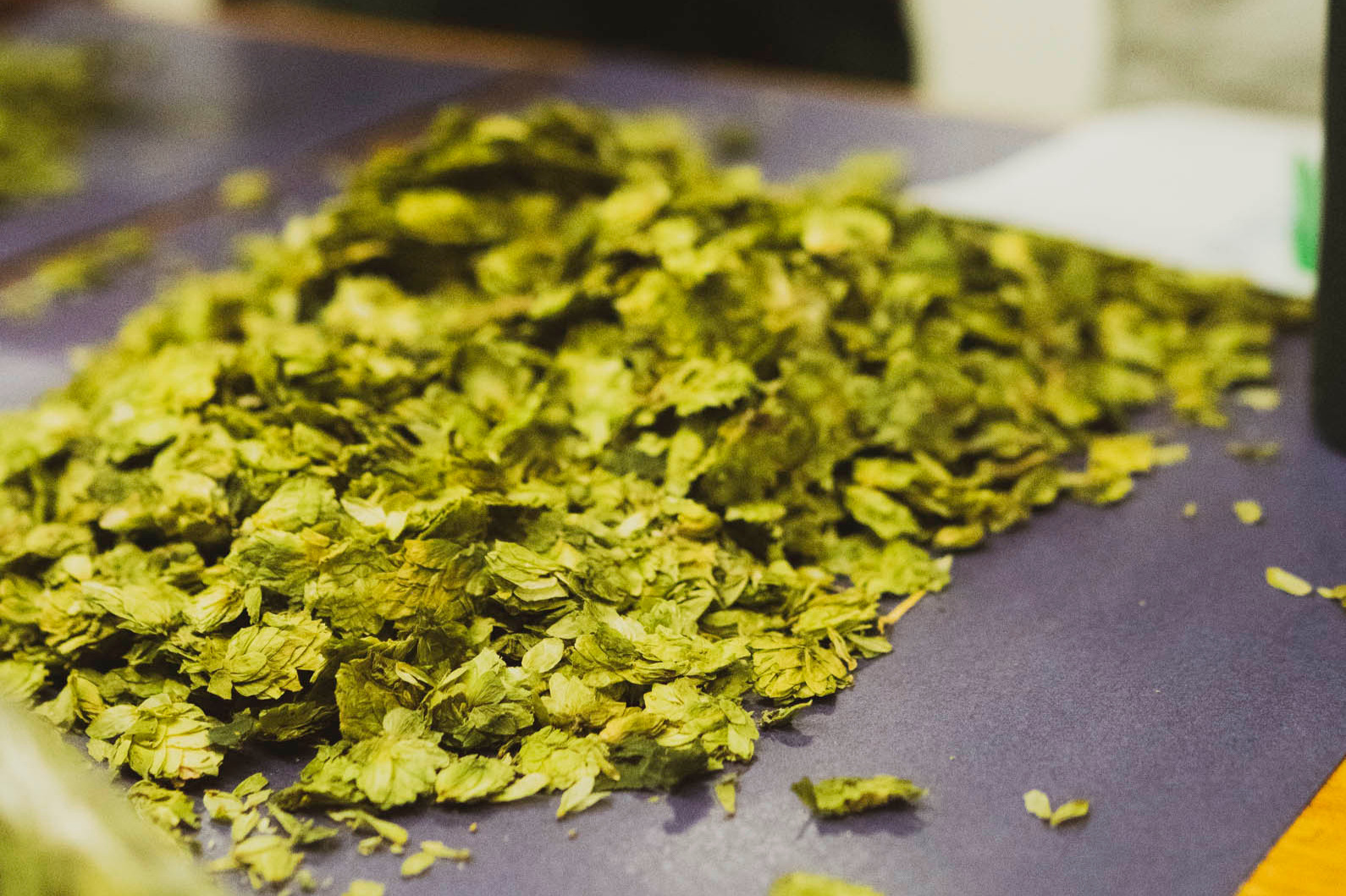 Sensory session at BayWa HQ.
At BayWa, the brewers were presented with a range of hop lots to conduct sensory evaluations. One of the standout observations amongst the team was just how much variation there could be between hop lots of the same variety from different hop farms.
For Martyn (New Bristol Brewery in London, UK), the experience reinforced the value of being able to assess individual lots rather than looking at a variety as though every batch will be identical. He was particularly interested in the possibility of selecting specific lots for his brewery, think US Hop Harvest lot selection, but German style!
The hop sensory sessions also challenged some existing preconceptions around German hops. Sureshot’s Sean noticed that newer German hop varieties were expressing far more fruit-forward aromas than he had encountered previously — a useful reminder of how modern hop breeding continues to expand the possibilities available to brewers.
Climate Factors in Europe Affecting Malt & Hops
The visit also highlighted the pressures facing hop growers, barley farmers, and maltsters. Charles Barth of Wicklow Wolf was particularly interested in how changing climatic conditions are influencing both hop production and barley growing (and, in turn, malt production).
From attempts to breed more heat-resistant hop varieties to the adjustments maltsters are making to their barley sourcing, the brewers gained a better appreciation of the challenges involved in maintaining the quality of hop and malt ingredients for beer as growing conditions change.
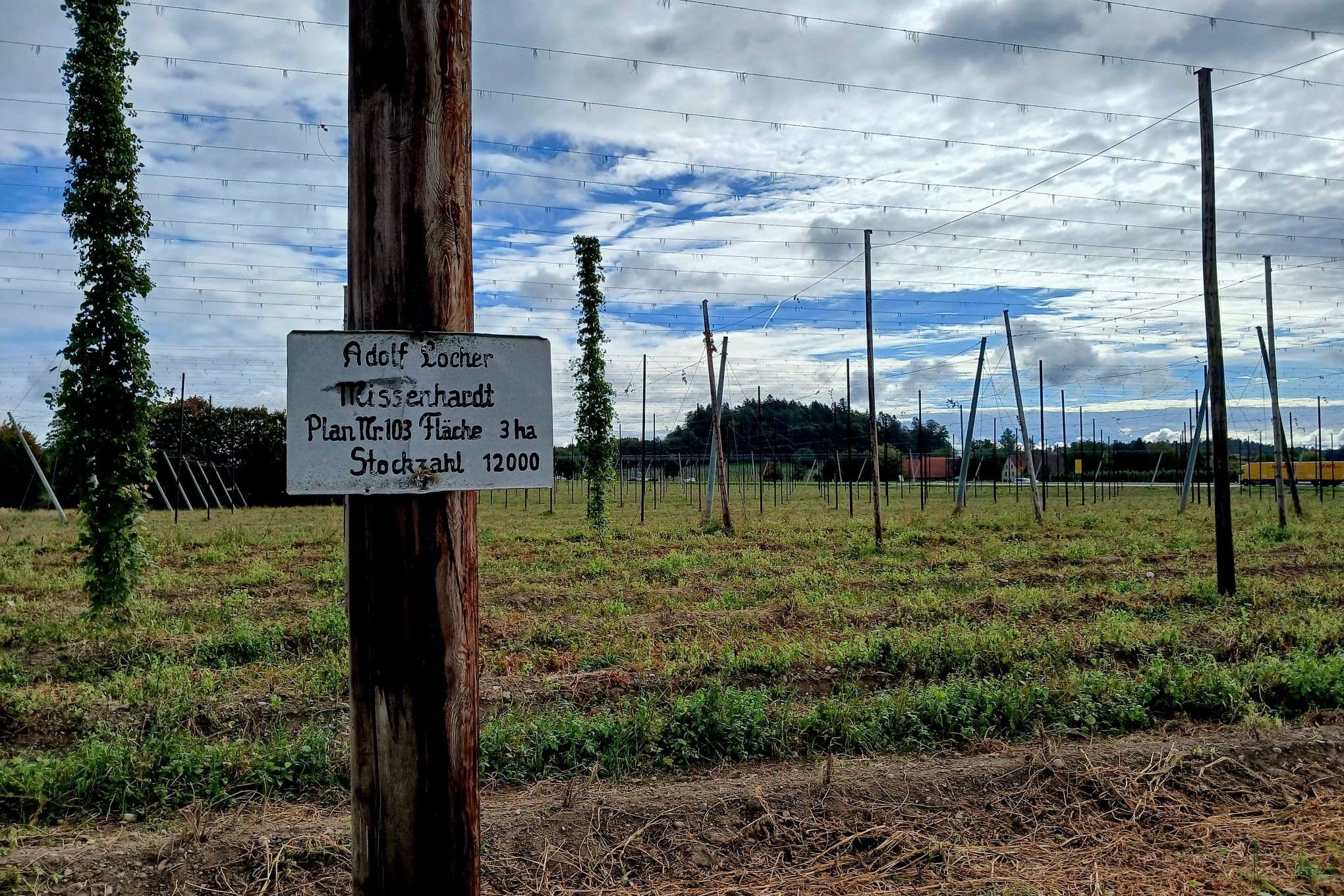 Locher Hopfen Farm. Photo by Jethro Holman.
For Charles, the trip provided a fresh perspective on the importance of understanding malt Certificates of Analysis (COAs), while also reinforcing how valuable it is to understand the wider context and pressure factors behind the ingredients arriving at the brewery.
"The biggest takeaway from the trip was probably the adaptions the maltsters and hop growers are having to make to cope with the changing climate. For the maltsters, looking at upping the percentage of spring and summer barley they are malting, so that yields are not depleting. For the hop growers, it all about looking at breeding more heat-resistant hop varieties to withstand the hotter and drier summers."
By the end of the trip, our brewers had a deeper understanding and appreciation for the technical decisions maltsters and hop producers have to make to counteract disruptions to yields because of shifting weather conditions year on year. From walking the hop farm, engaging with the maltsters and making that connection, it’s important to always see the link from farm to glass.
“[One thing that surprised me was] how much German hop alpha acids have been affected by warmer climates. I didn’t know that the alphas they would present as low as they were for some crops”
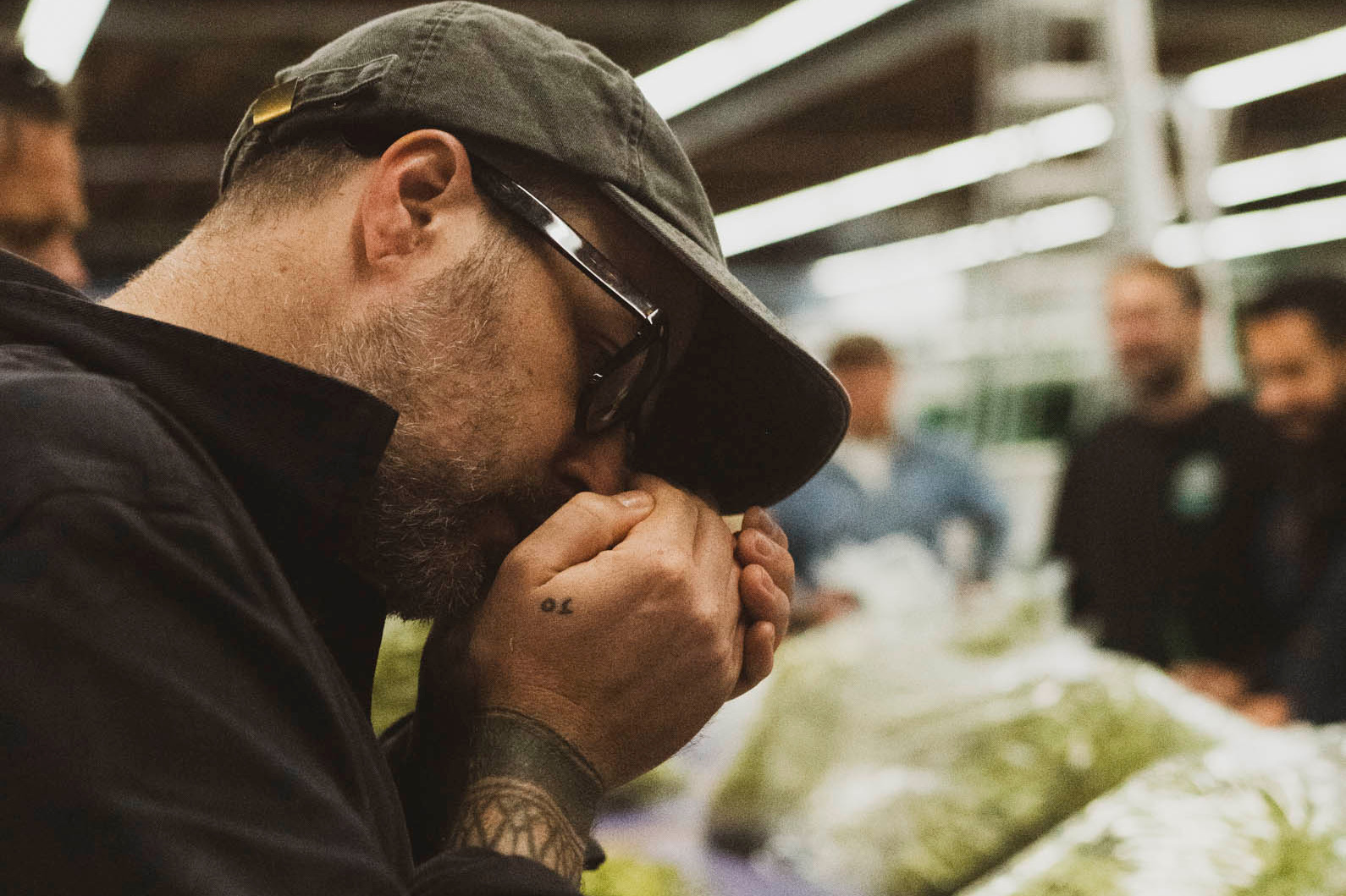 Karl Gowing during the BayWa hop sensory session.
A Memorable Stop at Locher Hopfen
For lots of our team, the visit to Locher-Hopfen farm was the defining moment of the trip. Understanding where hops come from, and hearing the stories and care behind their production can bring a new appreciation to an ingredient brewers work with every day. It is difficult to imagine a better endorsement of the value of meeting the people behind the ingredients than the experiences our brewers took away from this visit.
Standing among the hops and hearing directly from the hop farmer Ludwig about his work brought the realities of hop growing into focus. The passion behind the hop farm was as memorable as the hops themselves.
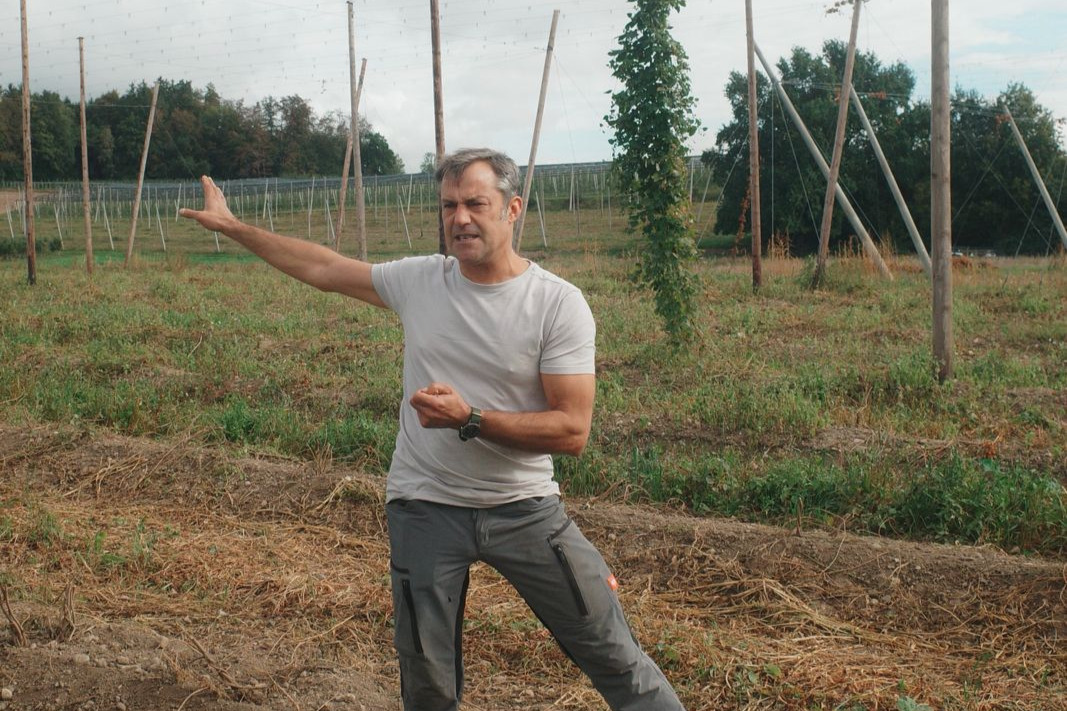 Ludwig Locher of Locher Hopfen Farm.
Ludwig Locher is a 4th generation hop farmer and owner of Locher-Hopfen. This farm has over 150 years of experience in hop growing and production across the four generations. In February 2026, Ludwig Locher won the gold award in the “Sustainable Hüll Aroma Hops” category for the Tango variety.
Martyn described being handed a cold bottle of Schönramer Pils by Ludwig after the hop farm tour as a particularly special moment. The experience also challenged his assumptions about carbonation in German pilsners and lagers.
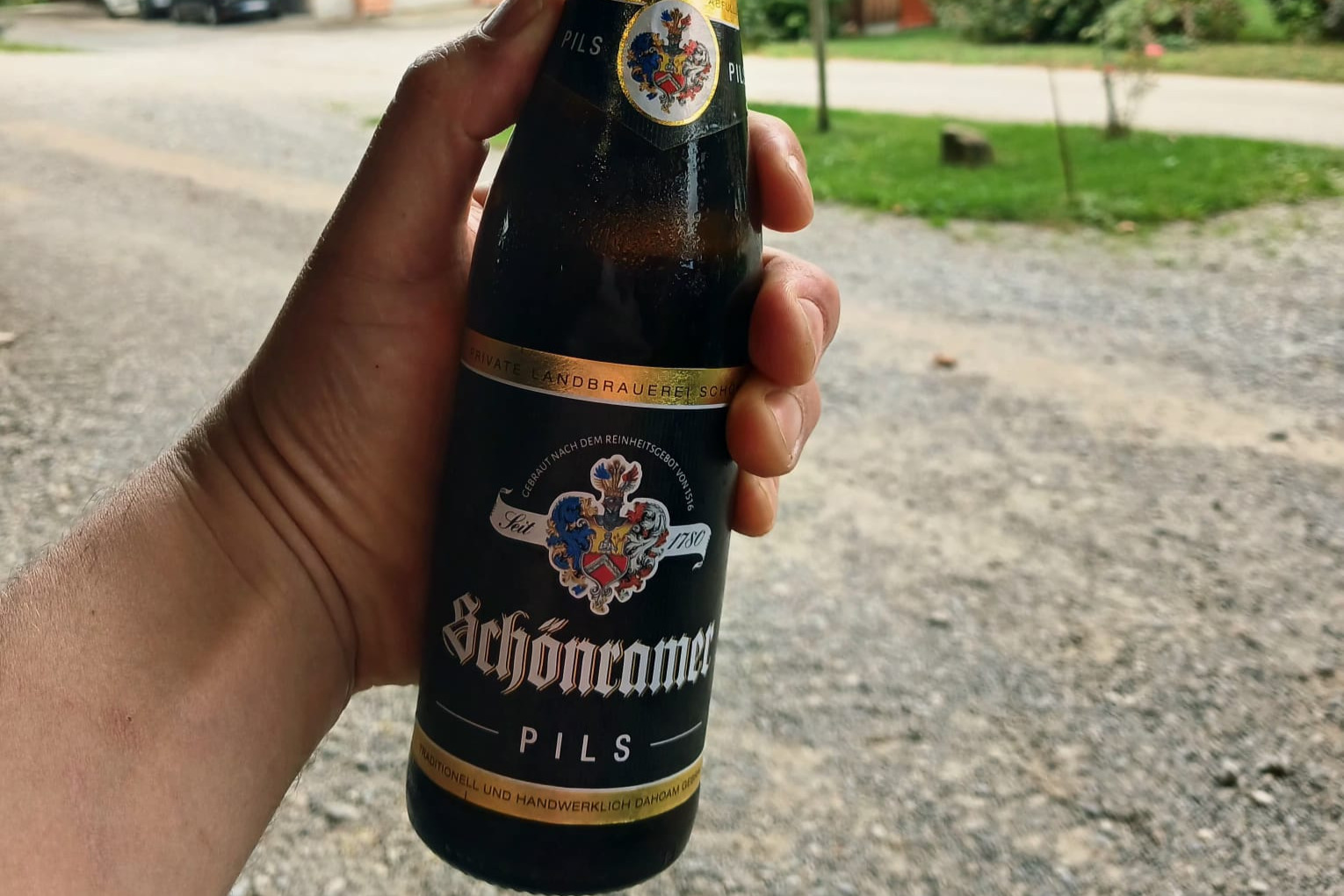 Schönramer Pils shared among brewers and hop producers.
“The beer was just so soft and hoppy and delicious! It really changed my mind about carbonation levels in Pils. I always had the impression that German lagers and Pils were really highly carbonated. We managed to sample so many great beers and the thing that always struck me is that they were way less carbonated than I originally thought. The beers just seemed so much softer for it”
Another highlight for Martyn was the memorable aromas from Ludwig’s cold store, safeguarding the precious bales of crop 2026 harvest.
“On the hop farm when Ludwig opened the cold store where all the bales were being kept, we were greeted with the lovely pungent aroma of freshly harvested and baled hops!”
Tristan Hembrow of Bristol Beer Factory shared a similar memory, describing the Schönramer Pils enjoyed after the farm tour as his highlight. A beer straight from the cold store, the view across the hop farm and time spent with a farmer who took great pride in the hops he grew and the beers they went into.
New Bristol Brewery are already firm fans of BESTMALZ and BayWa, and for Martyn, the trip to Germany reinforced his love for these ingredients.
“The quality [of BESTMALZ & BayWa] is amazing and meeting the people behind the companies and hearing their stories, and seeing their passion has just reinforced for me why we use them. When smelling the different hop lots at BayWa there was so much variation between farms, I would love to be able to select our own lots”
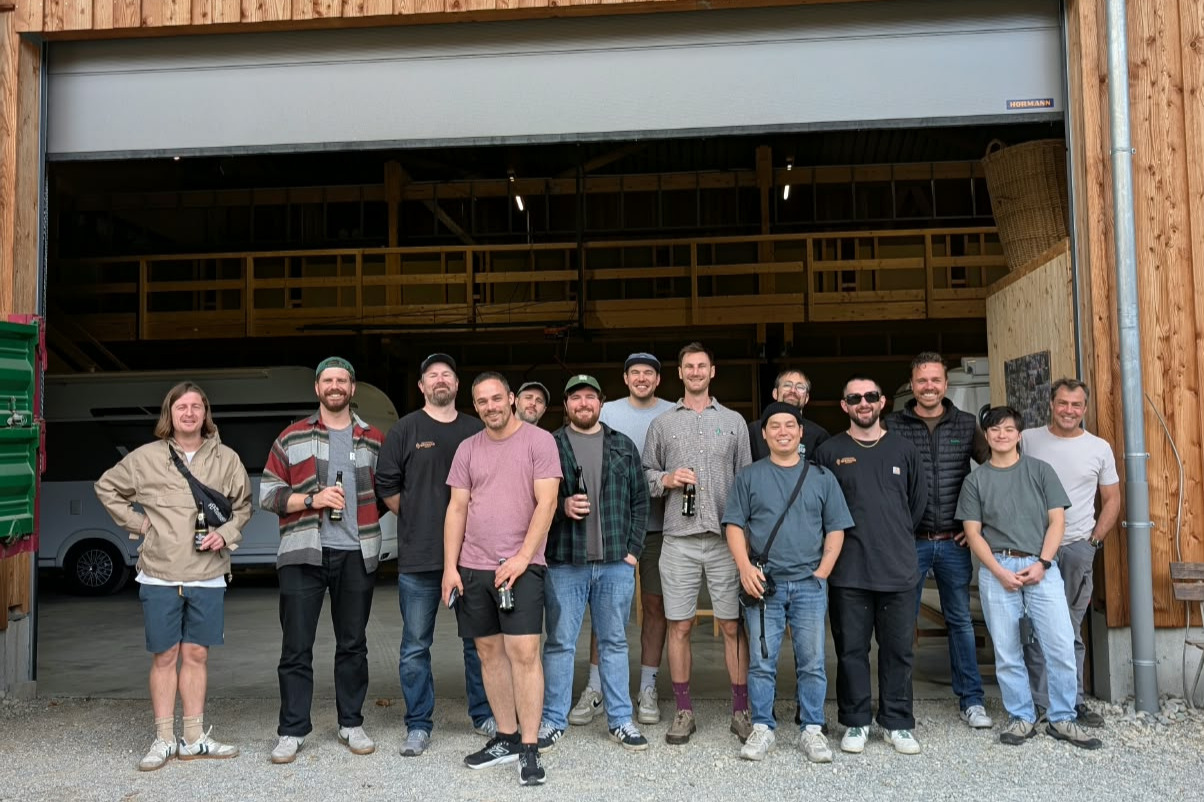 Visit to Locher Hopfen, L-R: Jordan Fancey (Unbarred Brewery), Paul Bogan (Ri-Ra Brewery), Robert Hamilton (Loughran Brewers Select Ltd), Charles Barth (Wicklow Wolf Brewery), Karl Gowing (Wiper & True), Sean Forde (Sureshot Brewery), Jake Hiom (Siren Craft Brewery), Tristan Hembrow (Bristol Beer Factory), Changmin Lee (Cloudwater Brewery), Martyn Lewis (New Bristol Brewery), Joshua Hampson (Loughran Brewers Select Ltd), Philip Meier (BayWa Hops), Jaime Lee ( Campervan Brewery) & Ludwig Locher (Locher Hopfen Farm).
Taking New Ideas Back to The Brewhouse
Our team learned a lot from their visits, but one of the most rewarding aspects for us at Loughran Brewers Select was watching the brewers bounce ideas off one another, swap notes, and discuss process improvements together.
For Wicklow Wolf’s Charlie, “It’s always good to spend time with other people with expertise in your field”, and he returned with an idea inspired by discussions with fellow brewers about lautering. He is keen to experiment with replacing rice hulls with Beta-Glucanase to help improve the process.
The exchange of knowledge was a recurring theme throughout the trip. From malt selection and hop characteristics to process improvements, the group had the opportunity to compare approaches, challenge their own assumptions (and we all know how hard that can be when you’re stuck in the day-to-day grind), and discover techniques they might not otherwise have considered.
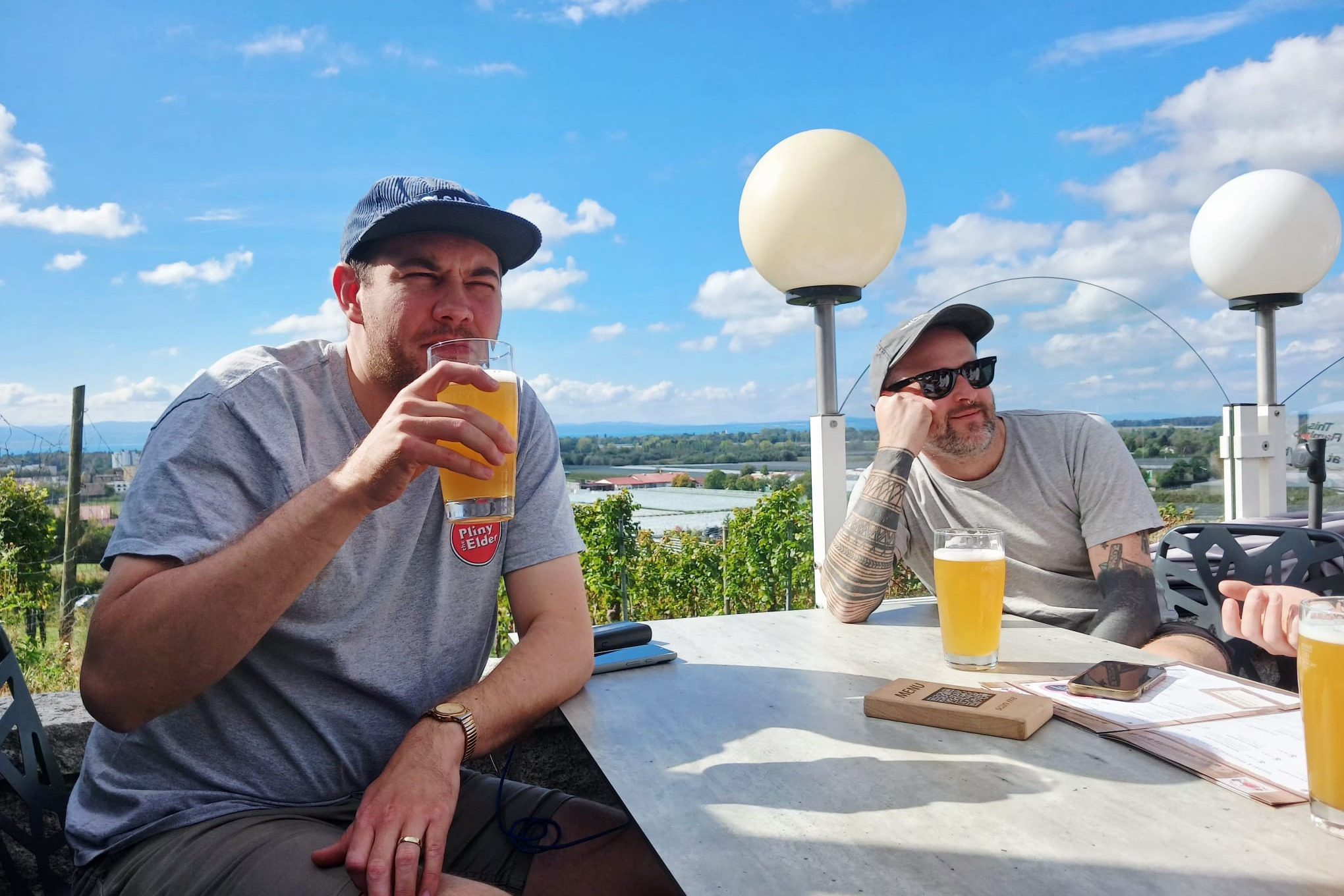 The last supper in Tettnang. L-R: Jake Hiom (Siren Craft) & Karl Gowing (Wiper & True).
The Beers
And you thought we’d wrap up without mentioning more beers we enjoyed on the trip, didn’t you? Well, you’d be wrong!
For Paul from Ri-Ra, the Sanwald Hefe-Weizen from Dinkelacker in Stuttgart was a highlight beer, thanks to its clean, fresh flavour and impressive head retention.
“The beer that stood out the most during the trip was Augustiner Edelstoff because you can pick it up in nearly every petrol station instead of hunting it out”
The abundance, availability, and quality of beer in petrol stations was particularly appealing and helpful to our group, satisfying their demands for ‘road sodas’ during long stretches of travelling through German roads and Autobahns.
Charles was less focused on one beer and more impressed by the overall availability and quality of Pilsner in Germany, noting how prominent the style was compared with Helles on tap line-ups.
I guess we could say that the teachable moment here is… drink more beer! There’s always something to learn from drinking the local beer in the places where those particular beer styles are part of everyday life.
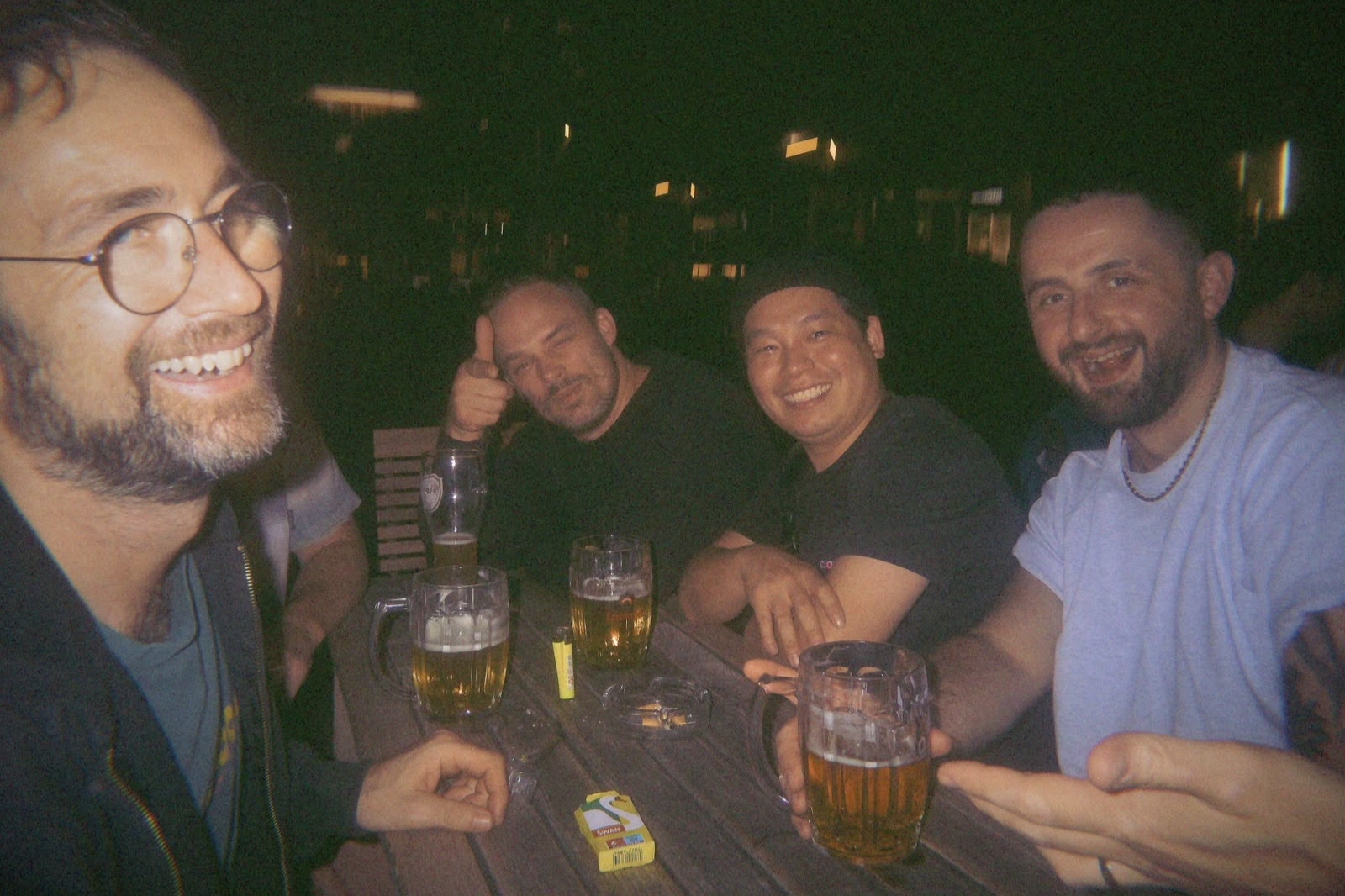 The last night pints in Ravensburg. Photo by Jethro Holman.
The Moments That Made The Trip
From Heidelberg Castle and its views across the city, to a sunny lunch overlooking a lake, there were plenty of opportunities to enjoy Germany and memories to be made beyond the malt and hops.
Sean recalled driving through central Stuttgart at rush hour after someone misread the map, while Charles celebrated his crew’s remarkable ability to beat Jethro’s team to every destination despite starting 15 minutes behind.
(At this point, the Accounts team has asked us to remind the lads that our boss James said that if any Autobahn speeding tickets followed them home, they are not allowed to stick them on expenses)
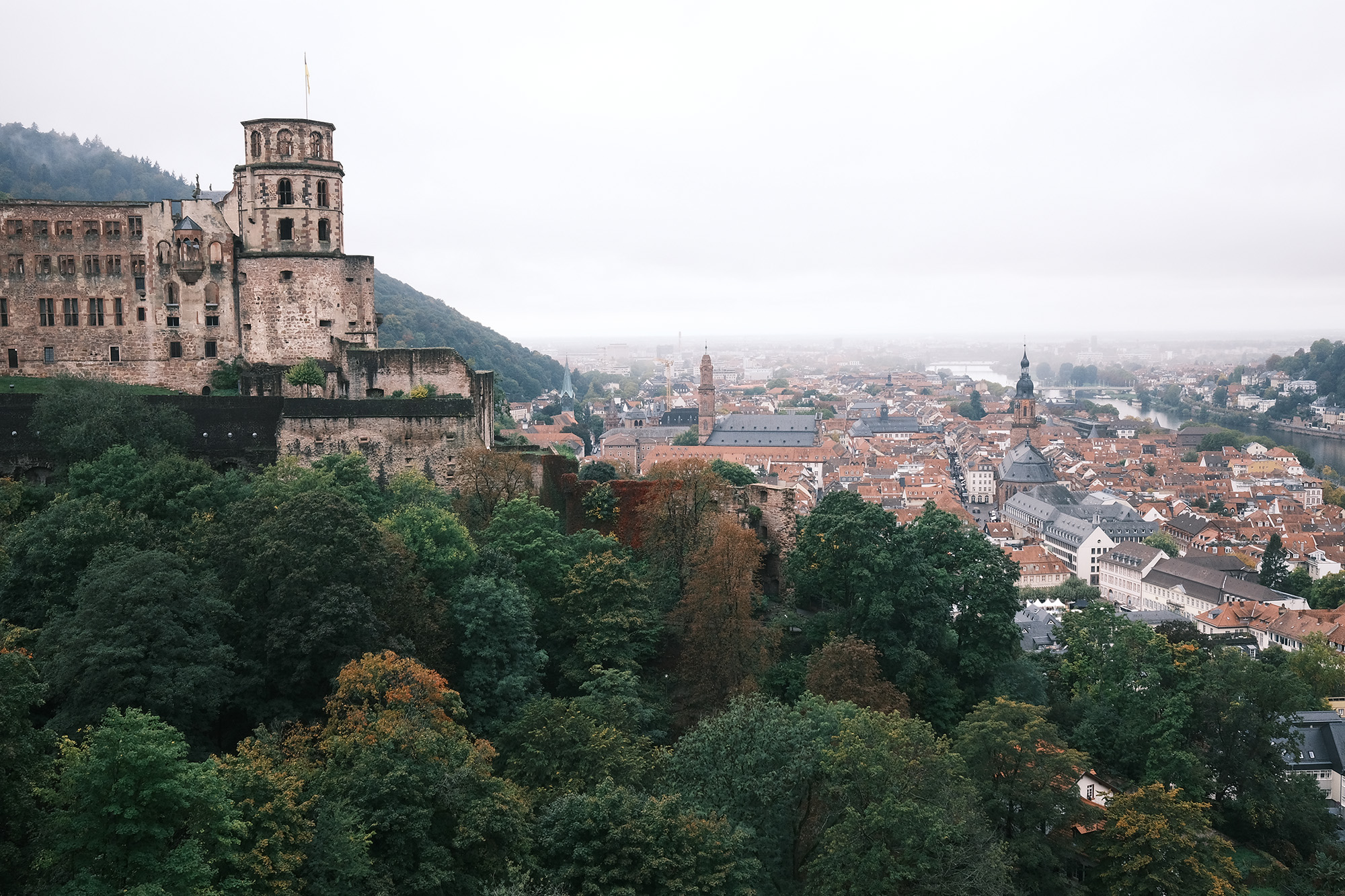 Heidelberg Castle. Photo by Mark Cotterell from Beak.
Ravensburg provided another memorable evening, with the group enjoying the sort of pub entertainment that brings people together — including a fiercely contested and gloriously lo-tech hammer-and-nail game (it really is as simple as it sounds).
For Tristan, that game was an easy choice for his favourite non-brewing moment. Paul agreed, alongside the memories captured on Jethro’s disposable digital camera.
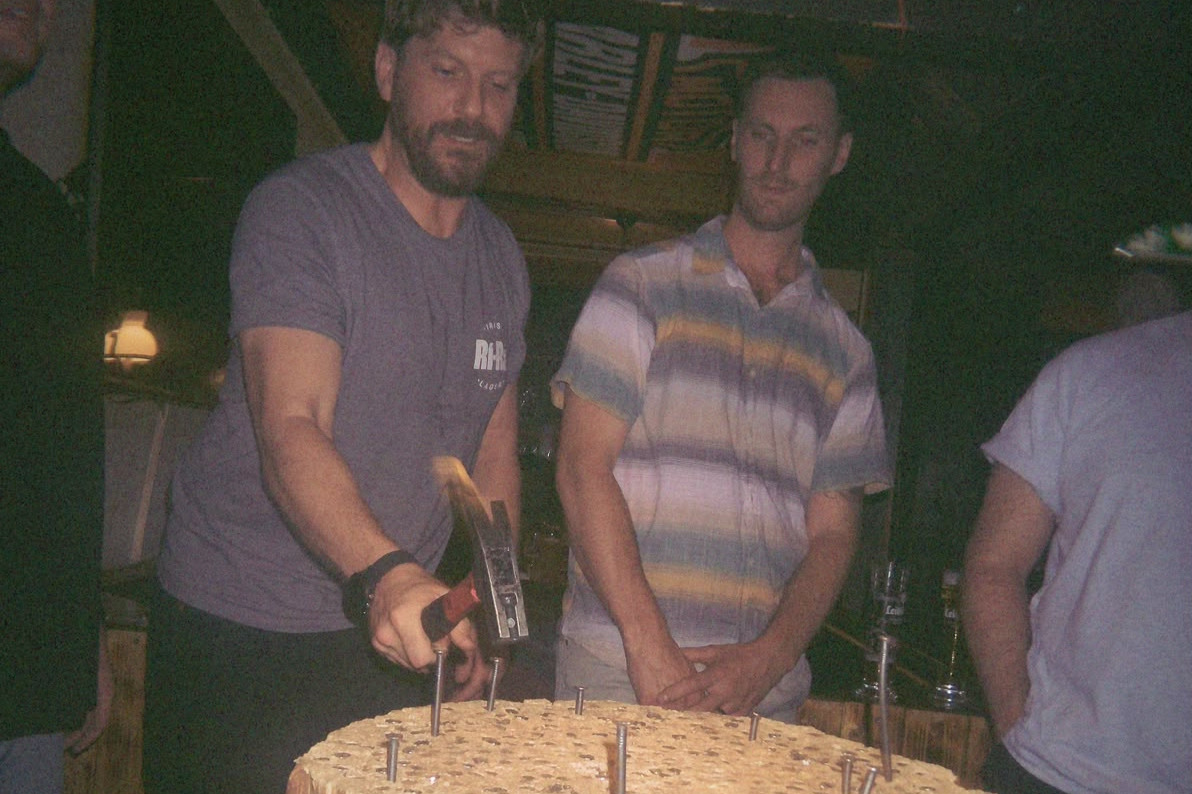 Hammer-and-nail game in Ravensburg pub. Photo by Jethro Holman.
And when asked for his favourite story from the van, Martyn’s response summed up the spirit of the group: “What happens in the van stays in the van”.
For our team, the real highlight of doing something like this is the opportunity to bring everyone together for a shared experience. A couple of our lads described it as being like a holiday with your old mates from school (hopefully with only minimal Inbetweeners-style disasters and cringe moments), and having this space for sights, beers, conversations and doing some actual work learning was the best of all worlds.
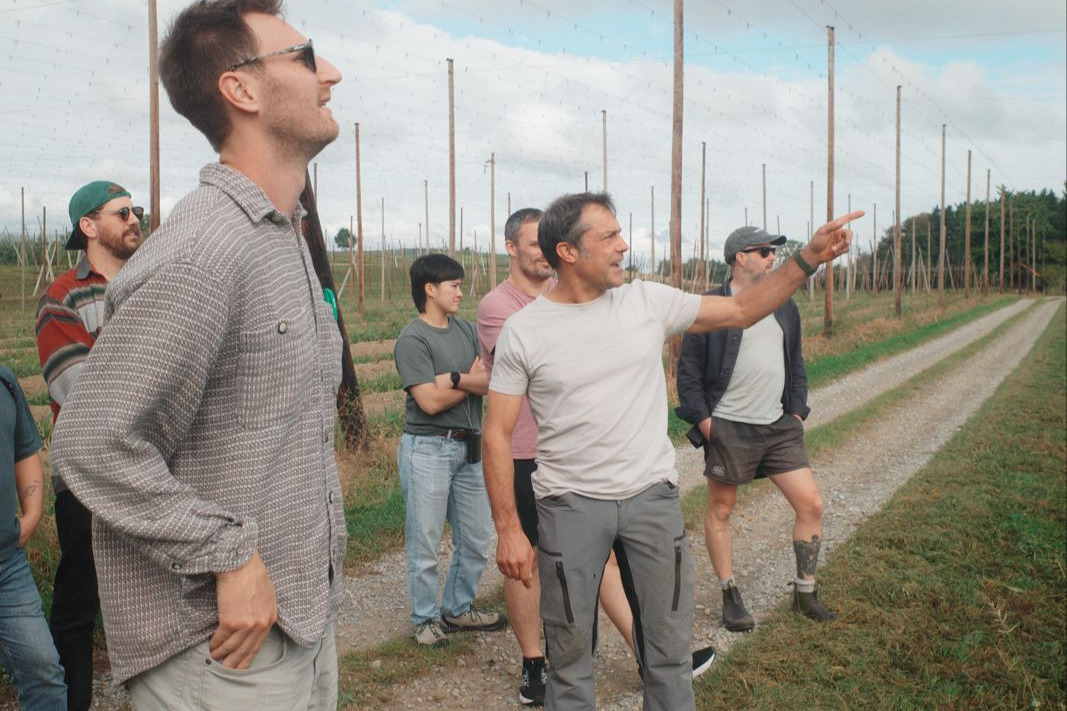 Photo by Jethro Holman.
More Than a Trip
The goal of our Germany trip was to give our brewers the opportunity to get closer to the ingredients behind great beer — but also to introduce them to the people who grow, process and supply them.
From the innovation on show at BESTMALZ, the variation uncovered during BayWa’s hop sensory sessions, and Ludwig’s passion at Locher-Hopfen, the visits offered fresh perspectives on an industry that is constantly adapting and evolving.
The experience also reinforced the importance of understanding the people and conditions behind ingredient supply. For some, it strengthened confidence in suppliers they already work with; for others, it opened new possibilities and prompted questions about how they source malt and hops.
The conversations between brewers were just as valuable, sparking new ideas around malt selection, hop sourcing and brewing processes that have continued back at home.
Perhaps the best summary came from the group itself. Charles described the trip as “exciting, eye-opening, and memorable”. For Martyn, it was simply an “Absolute Dream Trip”.
We couldn’t have put it better ourselves.
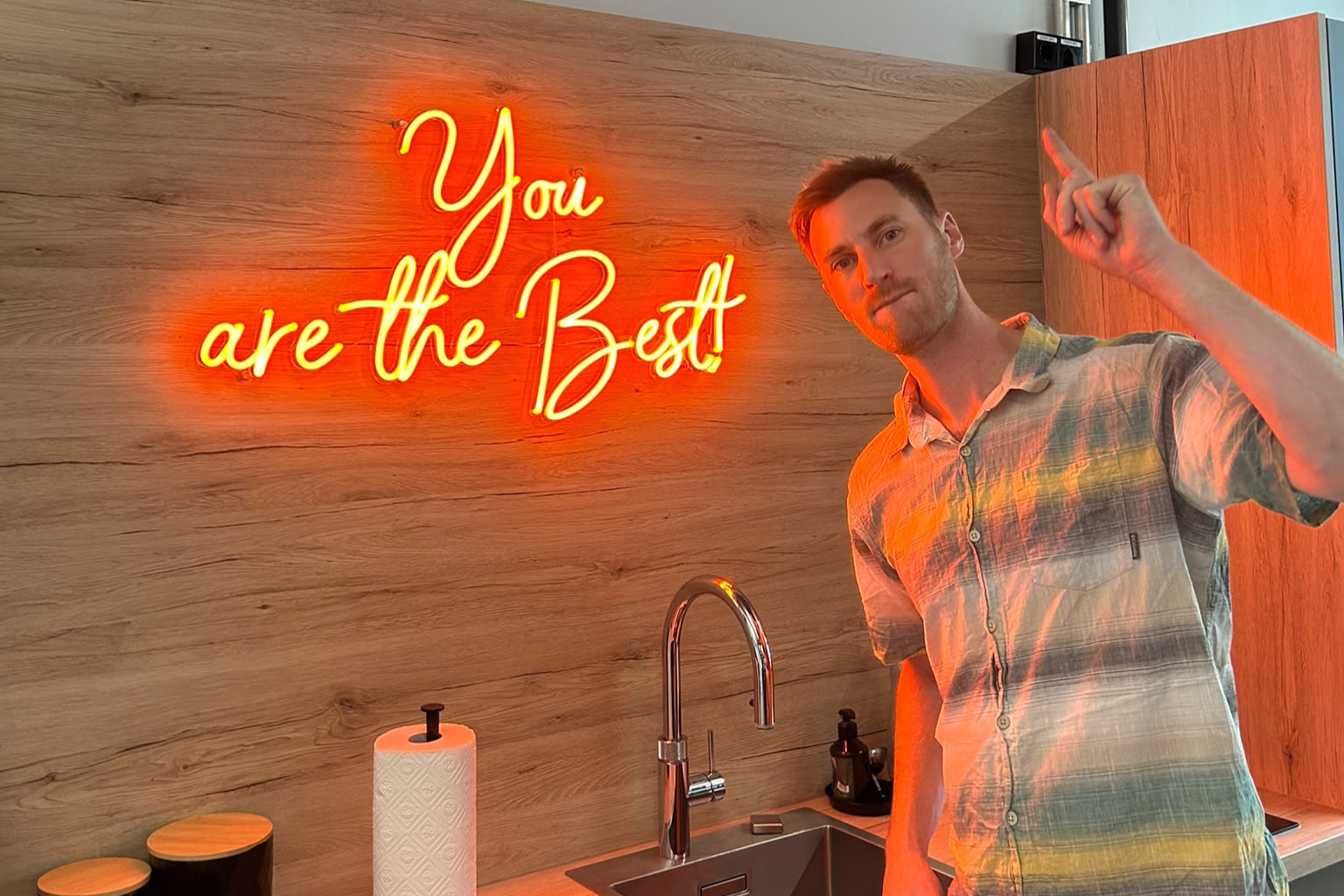 Tristan (Bristol Beer Factory) at BESTMALZ HQ.
A huge thank you to the teams at BESTMALZ, BayWa and Locher-Hopfen for welcoming us, sharing their knowledge and giving our brewers a closer look at the work behind the ingredients.
And thank you to all the brewers who joined us and helped make the trip such a success.
Here’s to the ideas, conversations and – naturally – the beers that come out of it!
Prost!
Lallemand Low Alcohol Brewing Webinar
Monday 7th December at 4PM
Advice from the experts to get you ready for January.