

Welcome to the best quality liquid yeast on the market
Pure quality exceptional performing yeast from the experts at White Labs.
Now available to add to your pallet or parcel delivery.
Navigation
Jump to the relevant section on the page:
Why White Labs?
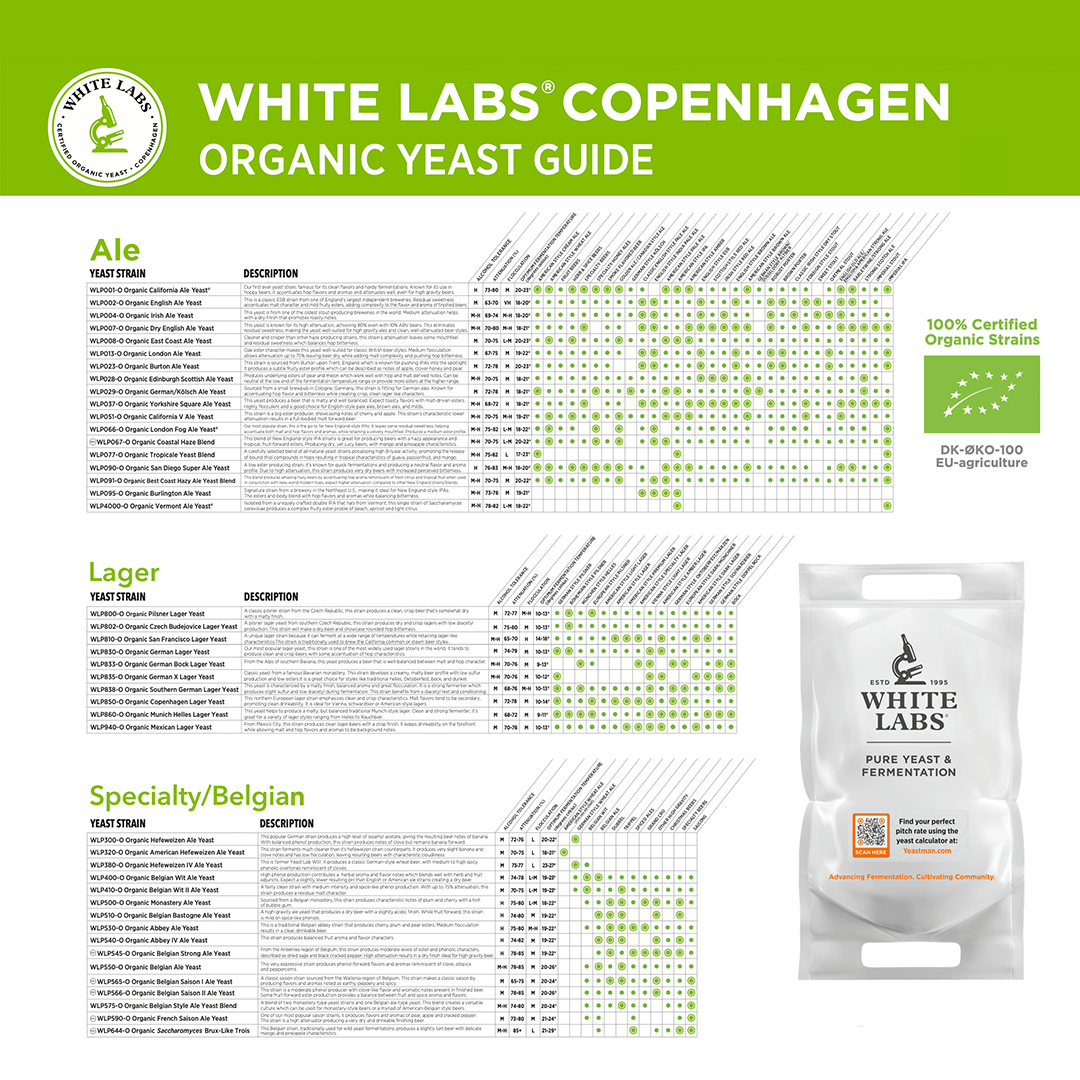
White Labs Yeast Varieties
Special Order White Labs Yeast Strains
Shipping
Guide to Healthy Fermentation
Fermentation Timeline
Pitching Guide
Pitching Rates
Pitching Rate Calculator
Yeast Nutrition
Harvesting & Repitching
Cell Counting
Yeast Viability
Why White Labs?
Founded in 1995, White Labs were the first to market with the brewing industry's first pitchable liquid yeast. Since then, they have built a reputation for producing premium quality, reliable liquid yeast that remains the gold standard for brewers around the world.
Today, White Labs produces more than 50 world-class brewing strains across its facilities in Copenhagen, Denmark, and in San Diego and Asheville, USA. In 2019, the Copenhagen site became a fully certified organic production facility, further strengthening White Labs' commitment to quality and innovation.
White Labs liquid yeast strains offer some of the highest cell concentrations available, delivered as a pure monoculture with over 95% viability from production, ensuring exceptional performance and consistency.
White Labs' partnership with Loughran Brewers Select marks the company's first distribution partnership in Europe. We're delighted to offer three of their most popular liquid yeast strains, available for rapid dispatch through our industry-leading one-stop-shop service.
High Performance, Reliable Yeast
The White Labs Promise:
The highest concentration (cells/mL) liquid yeast in the industry.
Vigorous QC process - over 38 quality check points throughout production.
Specific lab analysis for each batch - with COAs.
Pure monoculture.
Yeast from the experts - first to market with liquid yeast for brewers.
95%+ viability from date of production.
Innovation
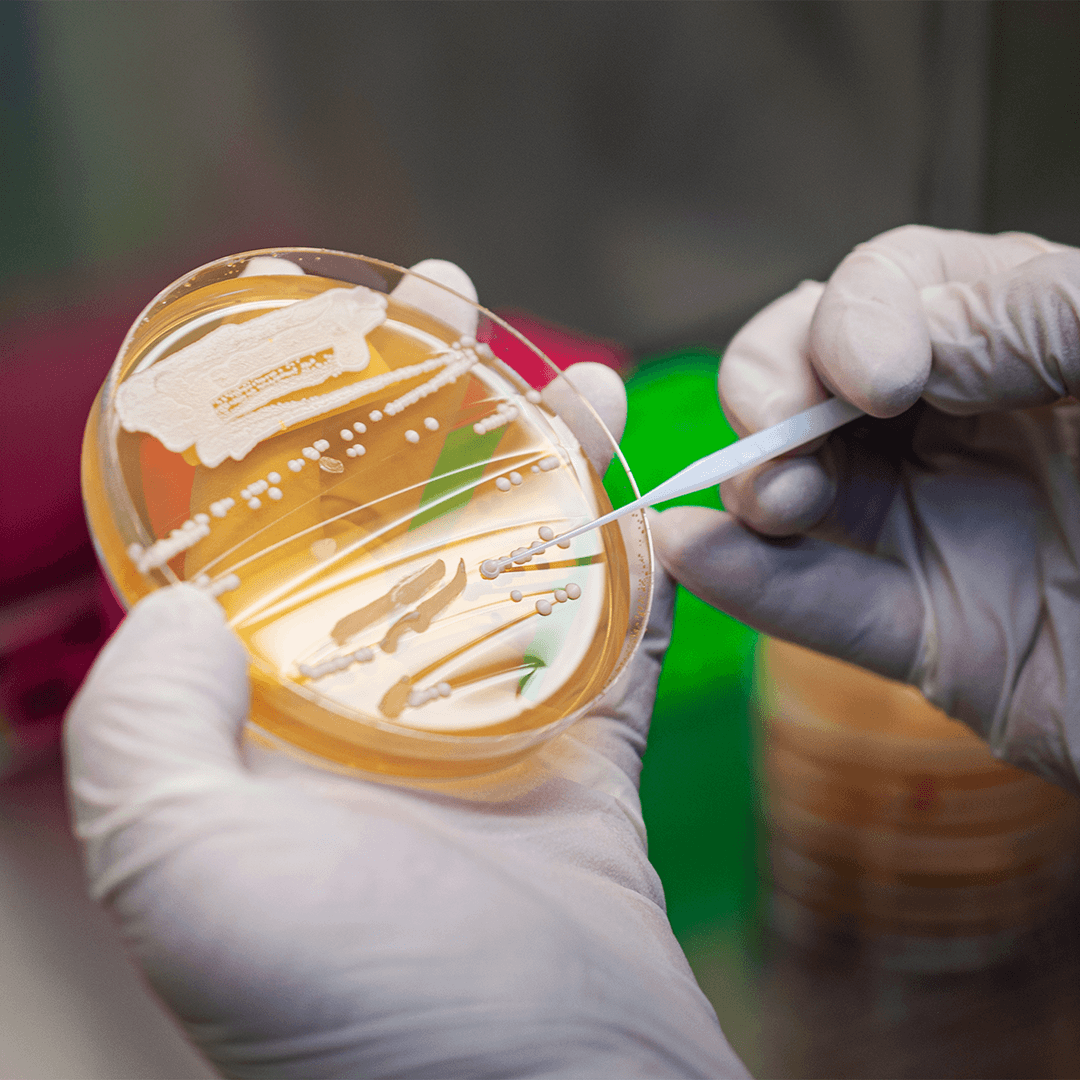
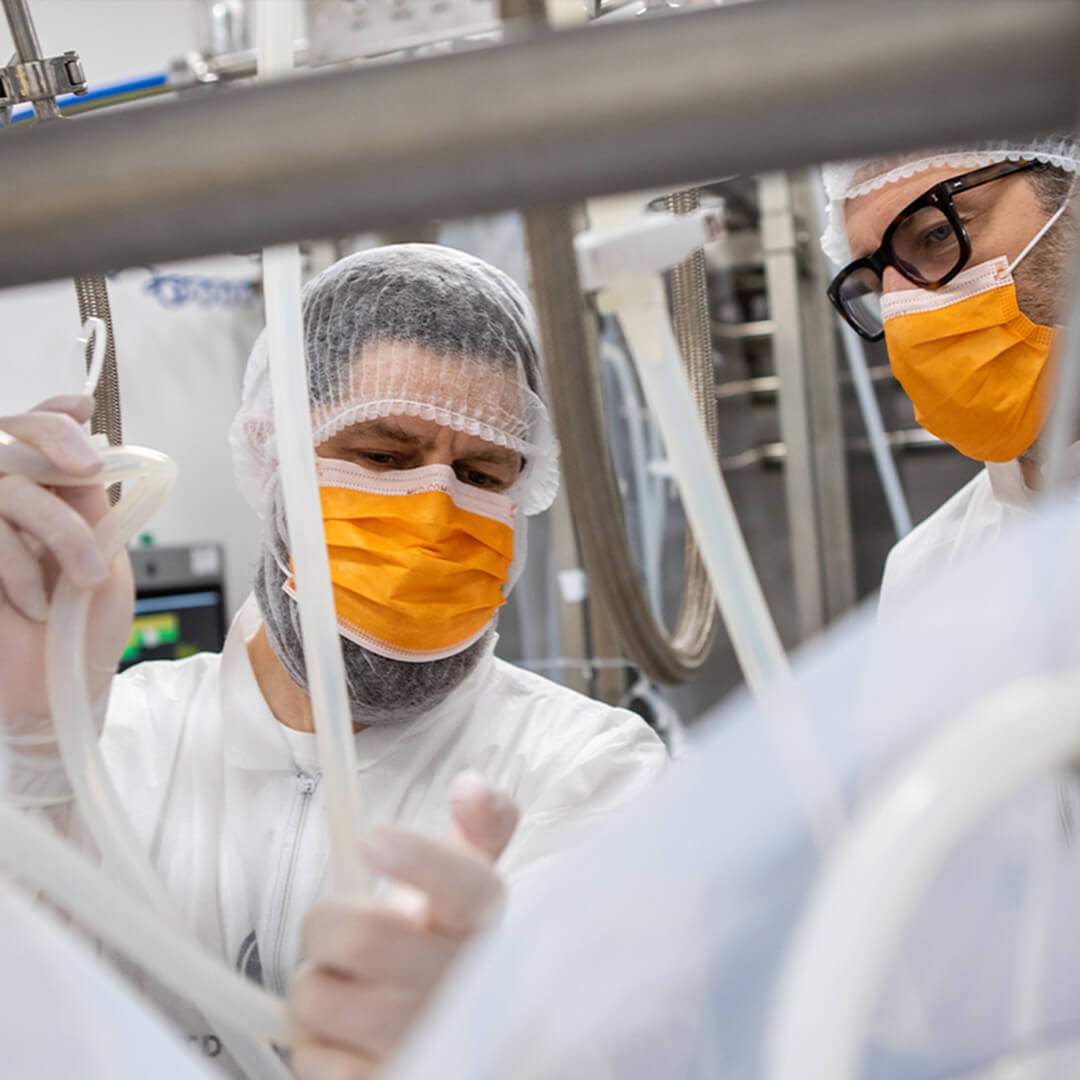
No Oxygen pickup or contaminants. Instead of a fermenting vessel, White Labs liquid yeast is cultivated in a closed system using their patented FlexCell™ technology.
Dedicated in-house R&D team constantly trialling new ideas and strains, and generating data.
On site 20HL brewhouse giving real-time first hand data on White Labs strains.
Support
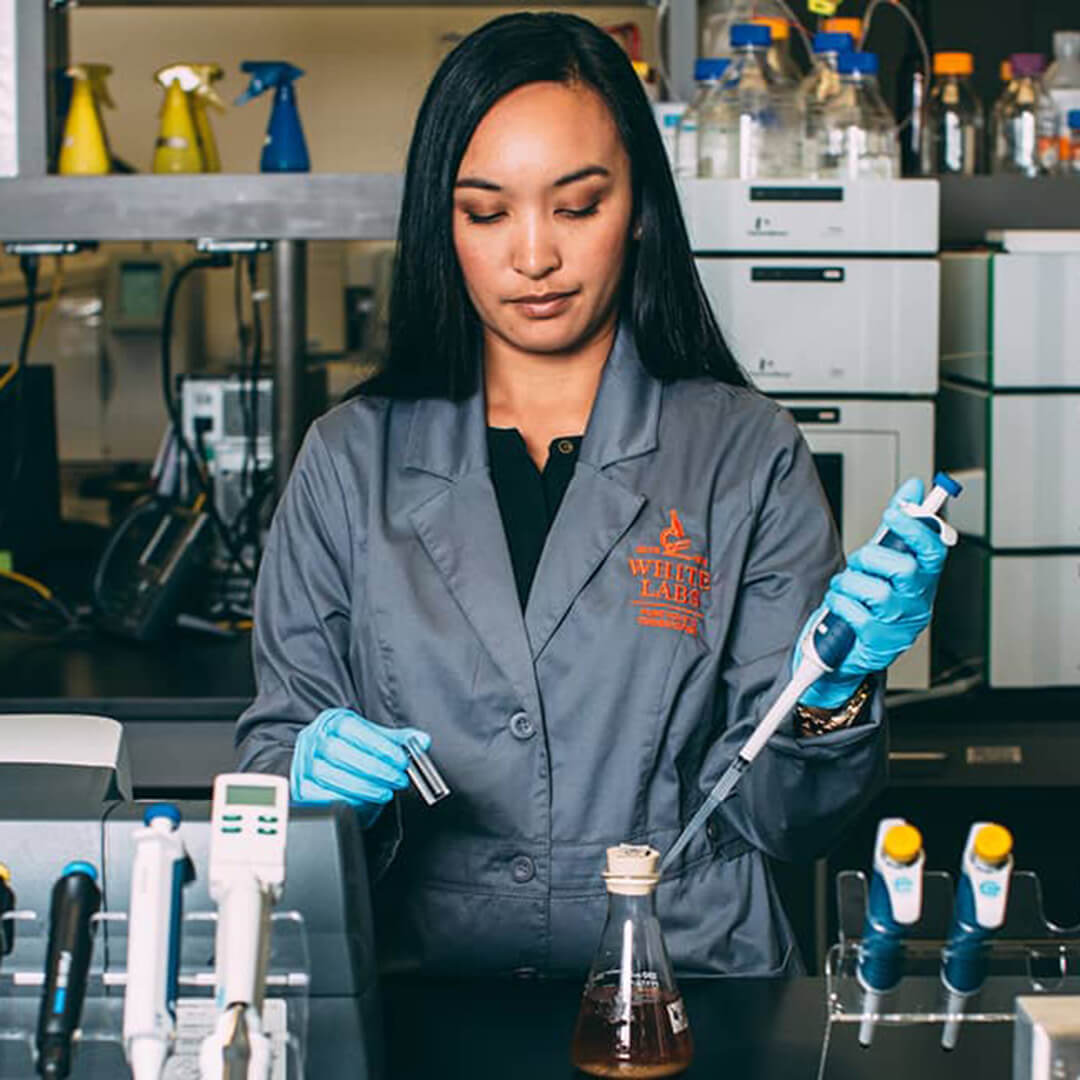
Knowledge from the experts Greg, & George, backed up by decades of experience from the pioneers in liquid brewing yeast, and a specialist team of R&D experts & microbiologists.
Workshops and seminars held throughout the year on topics like pitching rates and harvesting
PLUS talk to our dedicated Technical Sales Manager for advice on pitching rates, yeast cropping, and more.
White Labs WLP001 California Ale Liquid Yeast®
Iconic for a reason
The OG, this versatile and best-selling yeast was the first ever White Labs strain launched in 1995. Californian Ale Yeast is ideal for hoppy beers, offering clean flavours and good fermentations. By design, it accentuates hop flavours and aromas and attenuates well, even in high gravity beers. It’s usefully quick at reabsorbing diacetyl, and serves up clean, crisp, dry beers thanks to higher than average attenuation, and medium flocculation.
Beer Styles: IPAs & Hoppy Beers
Fermentation Range: 18° – 23°C
Aroma: Clean, Neutral
Attenuation Range: 73% – 85%
Flocculation: Medium
Alcohol Tolerance: Medium (5-10%)
STA1: Negative
Using Dried Yeast in your brewery?Buy White Labs WLP001 California Ale Dry Yeast® here

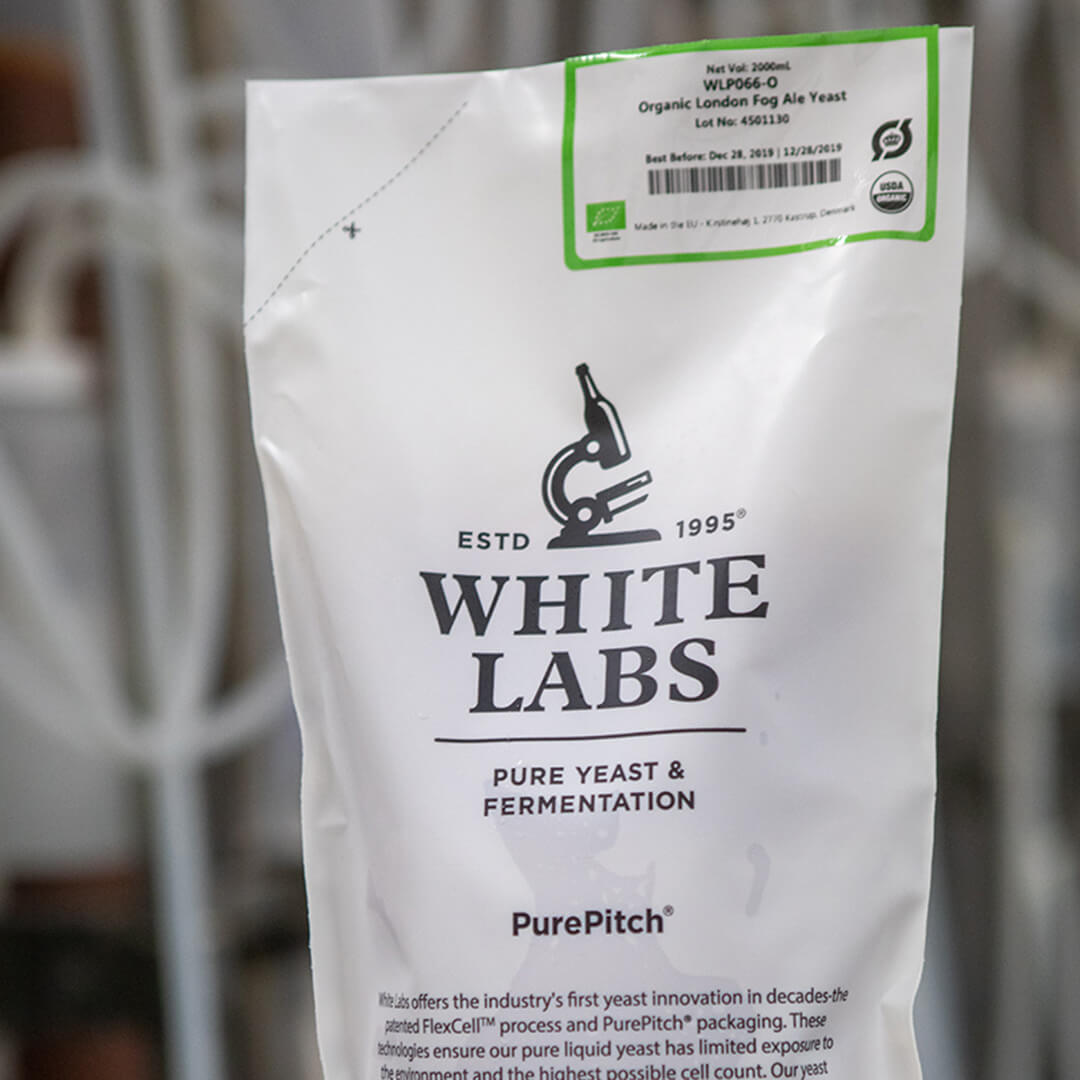
White Labs WLP066 London Fog Ale Liquid Yeast®
Level up your hazy IPA
Pineapple and ruby red grapefruit aromas abound in London Fog® Ale Yeast- bringing a nice hop balance to your hazies, whilst leaving a little residual sweetness and a velvety mouthfeel. This yeast will also perform nicely in bitters, porters, stouts and red ales.
Beer Styles: Hazy & Juicy IPAs
Fermentation Range: 17° – 21°C
Aroma: Pineapple, ruby red grapefruit
Attenuation Range: 75% – 82%
Flocculation: Low to Medium
Alcohol Tolerance: Medium (5-10%)
STA1: Negative
Using Dried Yeast in your brewery?Buy White Labs WLP066 London Fog Ale Dry Yeast® here

WLP830 German Lager Yeast
The de-facto liquid lager yeast
The most popular lager yeast in the White Labs range, making this one of the most widely used lager strains on the planet. Use WLP830 German Lager Yeast to brew the most clean and crisp lagers out there, whilst also accentuating the characteristics of your hops. It’s a great strain for beta-lyase biotransformation potential too. Beta-lyase activity releases bound thiols from hops (sulfur-based compounds) into free thiols (passionfruit and guava aromas). The fact this strain is POF negative gives it a big advantage over other POF positive or phenolic high beta-lyase biotransformation strains which can overpower free thiols with their own tropical flavours.
Beer Styles: Hazy & Juicy IPAs
Fermentation Range: 17° – 21°C
Aroma: Cereal, crisp, clean
Attenuation Range: 74% – 79%
Flocculation: Medium
Alcohol Tolerance: Medium (5-10%)
STA1: Negative
Check out the lager pitching guide

Special Order White Labs Yeast Strains
We can supply any yeast from the White Labs Liquid range by special order*
Still not found the strain you’re looking for?
Hit the button to browse the full White Labs Liquid Range
(*lead times apply)
Contact Us for more info
Shipping
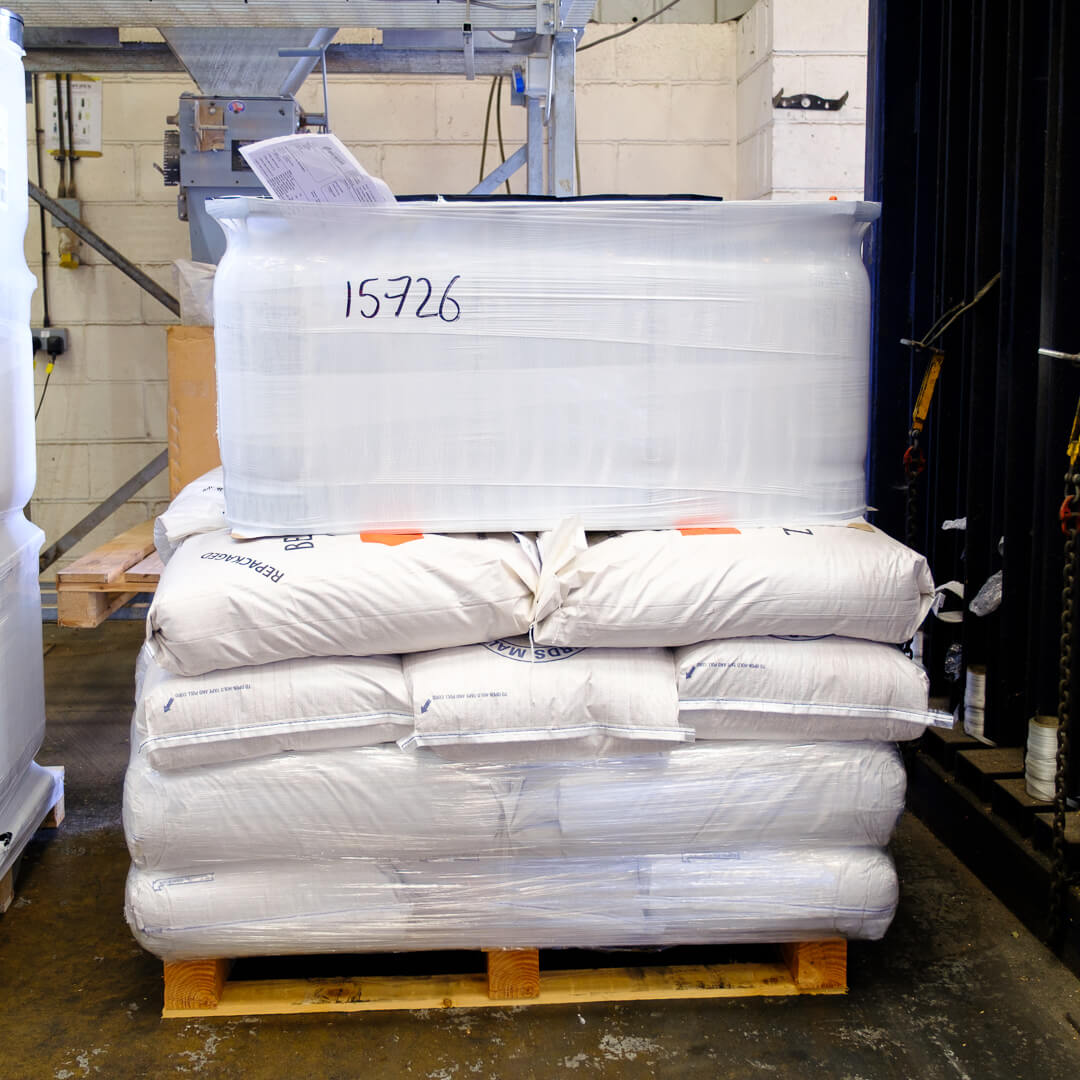
Add White Labs Liquid Yeast to your pallet or parcel
Shipping Days are Monday-Thursday via:
Industry-Leading Next Day Delivery Service
Or Standard Delivery service.
Because we believe in keeping things as simple as possible for you, White Labs Liquid Yeast can be shipped with the rest of your order when you build a pallet or parcel with us!
3 External Factors to control a Healthy Fermentation
1. Pitch Rate
2. Fermentation Temperature
3. Dissolved Oxygen
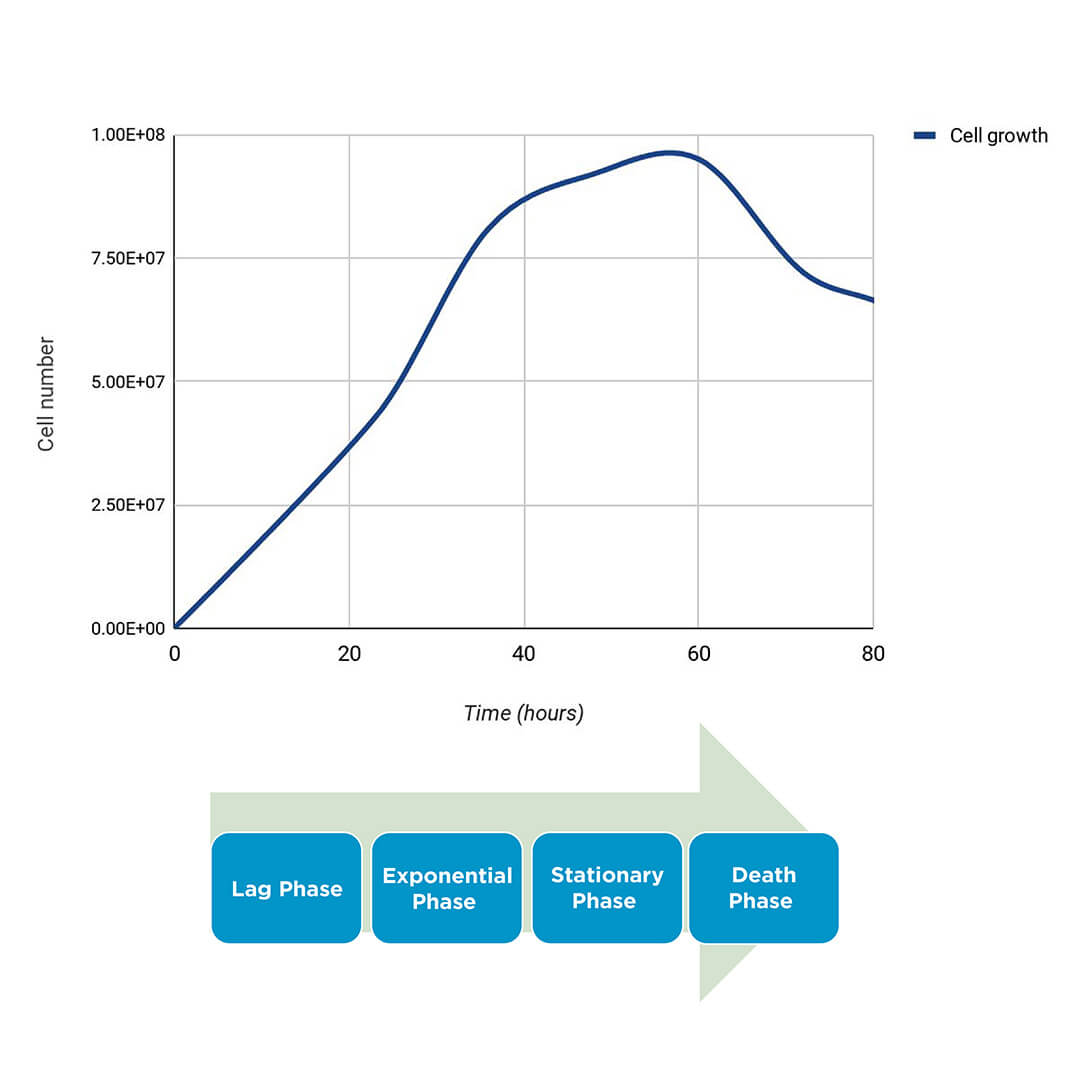
Fermentation Timeline
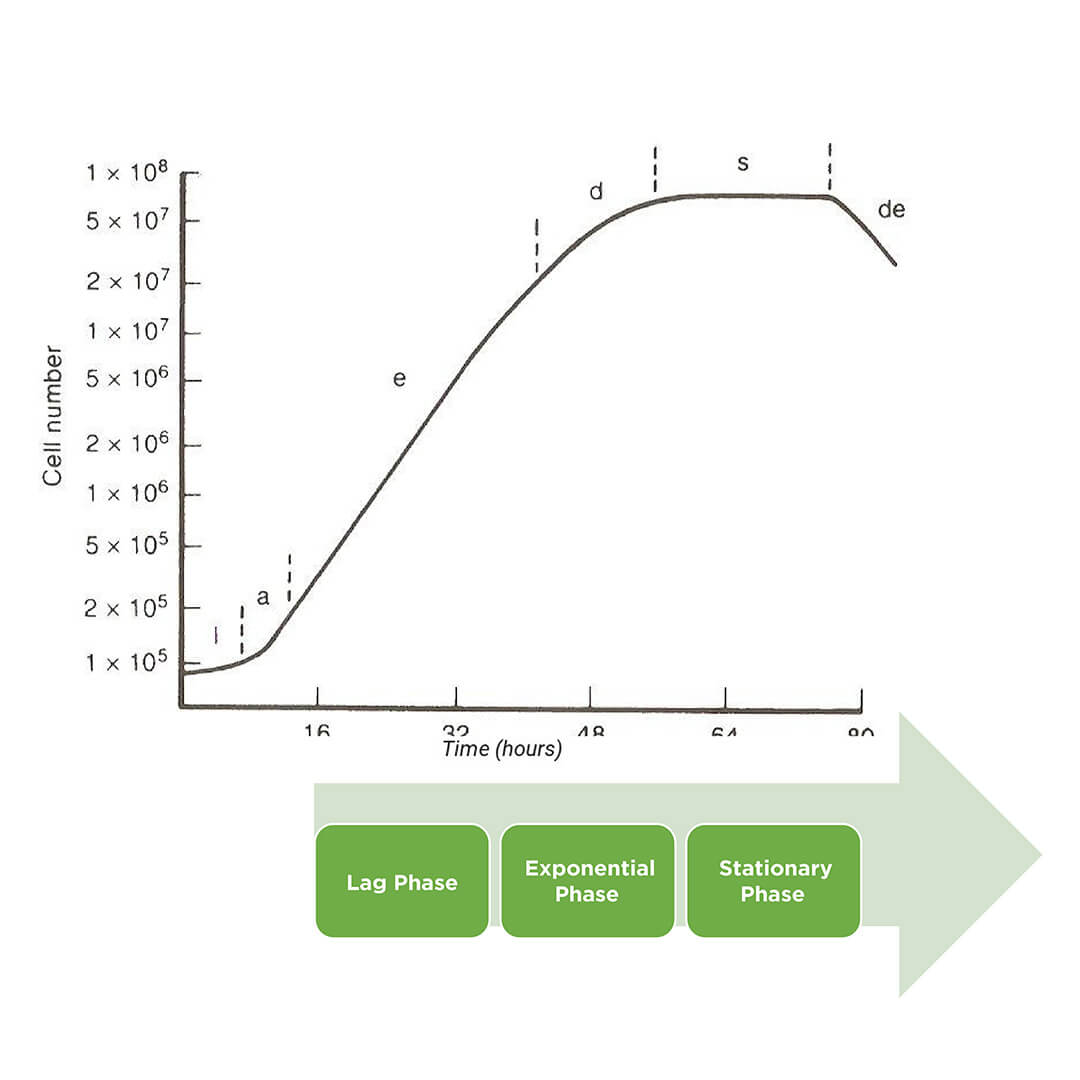
Early fermentation
Yeast uses all the dissolved oxygen; there is no detectable uptake of glucose
8-16 hours
First sign of active fermentation
8-16 hours
First sign of active fermentation
24 hours
Budding yeast cells observed
Temperature, if uncontrolled, rises due to heat generated by the fermentation
24-48 hours
The rate of yeast growth and carbohydrate assimilation reaches a maximum
Post 48 hours
The pH falls to a minimum of 3.8 – 4.4 before rising slightly towards the end of fermentation.
The White Labs Pitching Guide
Take a deep dive below for a quick primer on wet yeast pitching rates
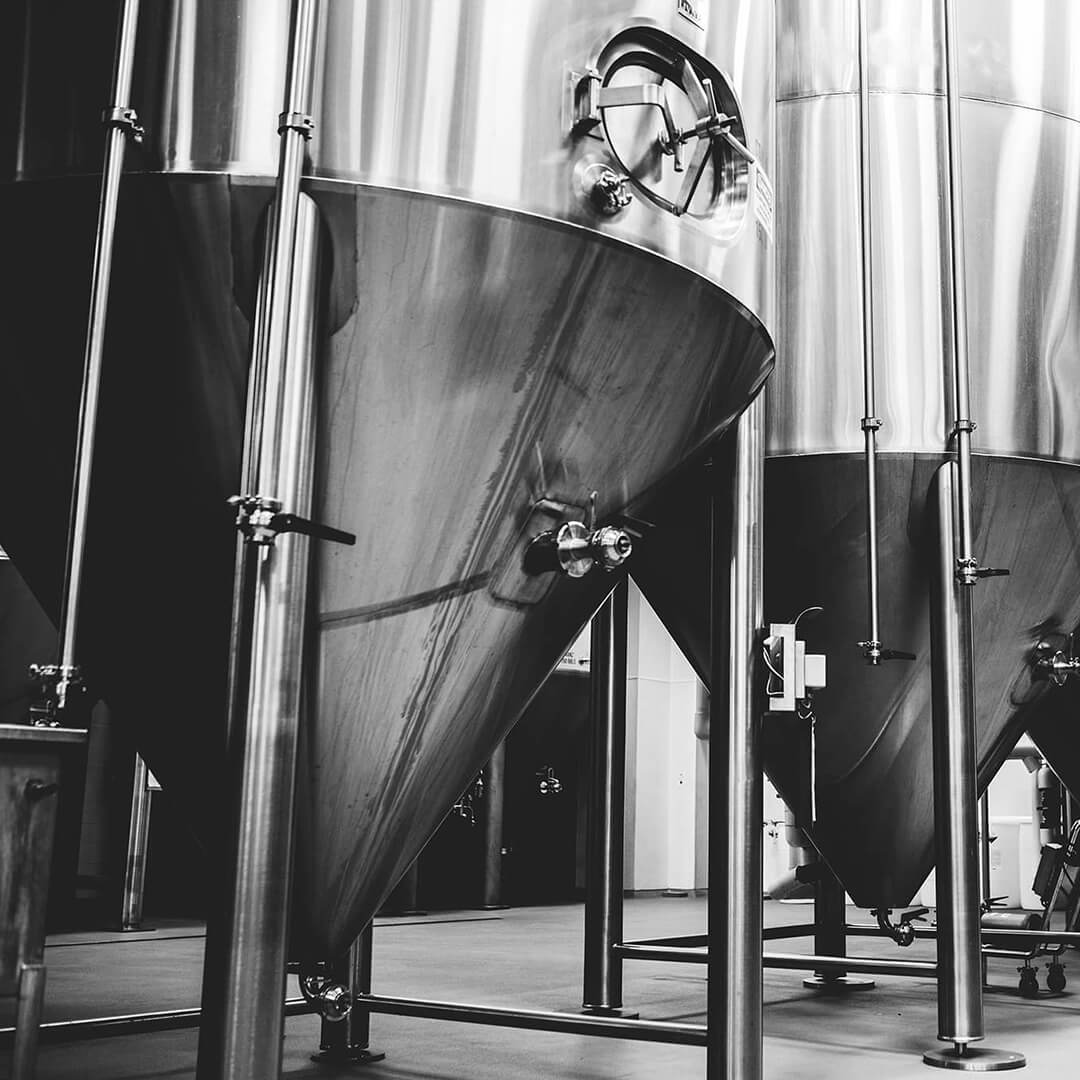
Why is pitching rate important? Potential Side Effects of Over or Under-Pitching
The wrong pitching rate can cause unnecessary stress and variable growth rates in yeast, leading to:
Off-flavours
Slow or Stalled Fermentation
Flocculation Issues
Unpredictable harvest volume yields when cropping
Long term impact on the health of future yeast generations
Yeast Cell Growth has a direct impact on the flavour of your beer.
Tweaking pitch rates can enhance or negatively affect a desired beer style.
Low Pitching Rate:
Increased yeast cell growth during fermentation
Increased yeast-derived flavour compounds
Higher ester expression
Good for creating: Hefeweizens, Saisons, & Belgian beers
High Pitching Rate:
Reduced yeast cell growth during fermentation
Lower yeast-derived flavour compounds
Reduced ester expression
Good for creating: Lagers & Imperial Stouts - anything with a 'cleaner' style, colder fermented, or a 'big' beer.
Pitching Rates
Before calculating your pitch rate, you'll need to establish:
Batch Size (single brew or multiple brews?)
Original Gravity/Plato
Fermentation temperature - Ale or Lager
Do you plan to harvest and repitch?
Rough guide to pitching rates
We recommend you chat to your dedicated sales manager or our technical sales manager for more info
Below is a rough guide only:
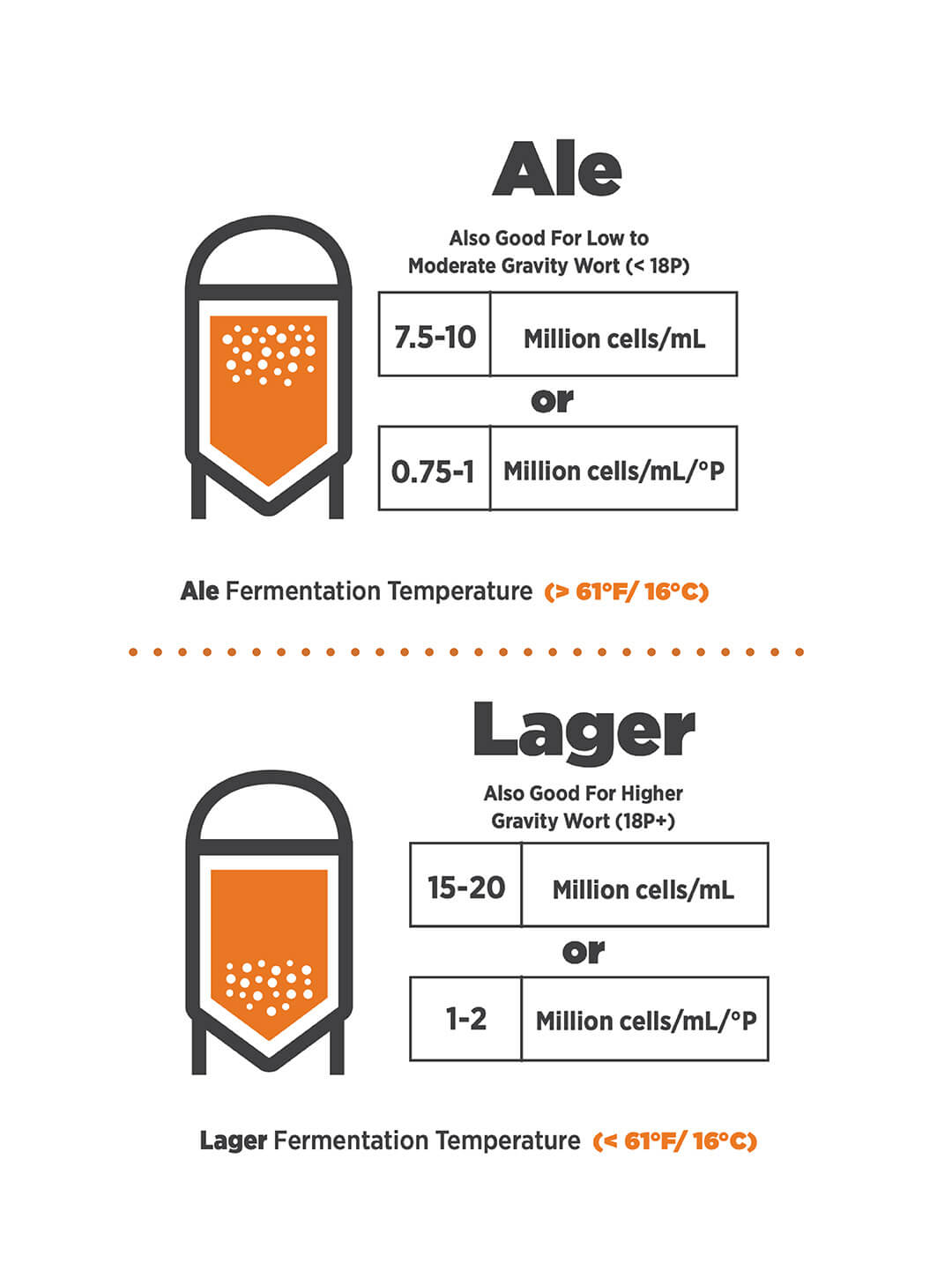
Recommended Pitch Rate – Ale
Also for moderate to low to moderate gravity wort (< 1.074/18P)
7.5-10 Million cells/mL
OR
0.75/1 Million cells/mL/°P
Ale fermentation temperature of >16°C
Recommended Pitch Rate – Lager
Also for higher gravity wort (Above 1.074/18P)
15-20 Million cells/mL
OR
1-2 Million cells/mL/°P
Lager fermentation temperature of <16°C
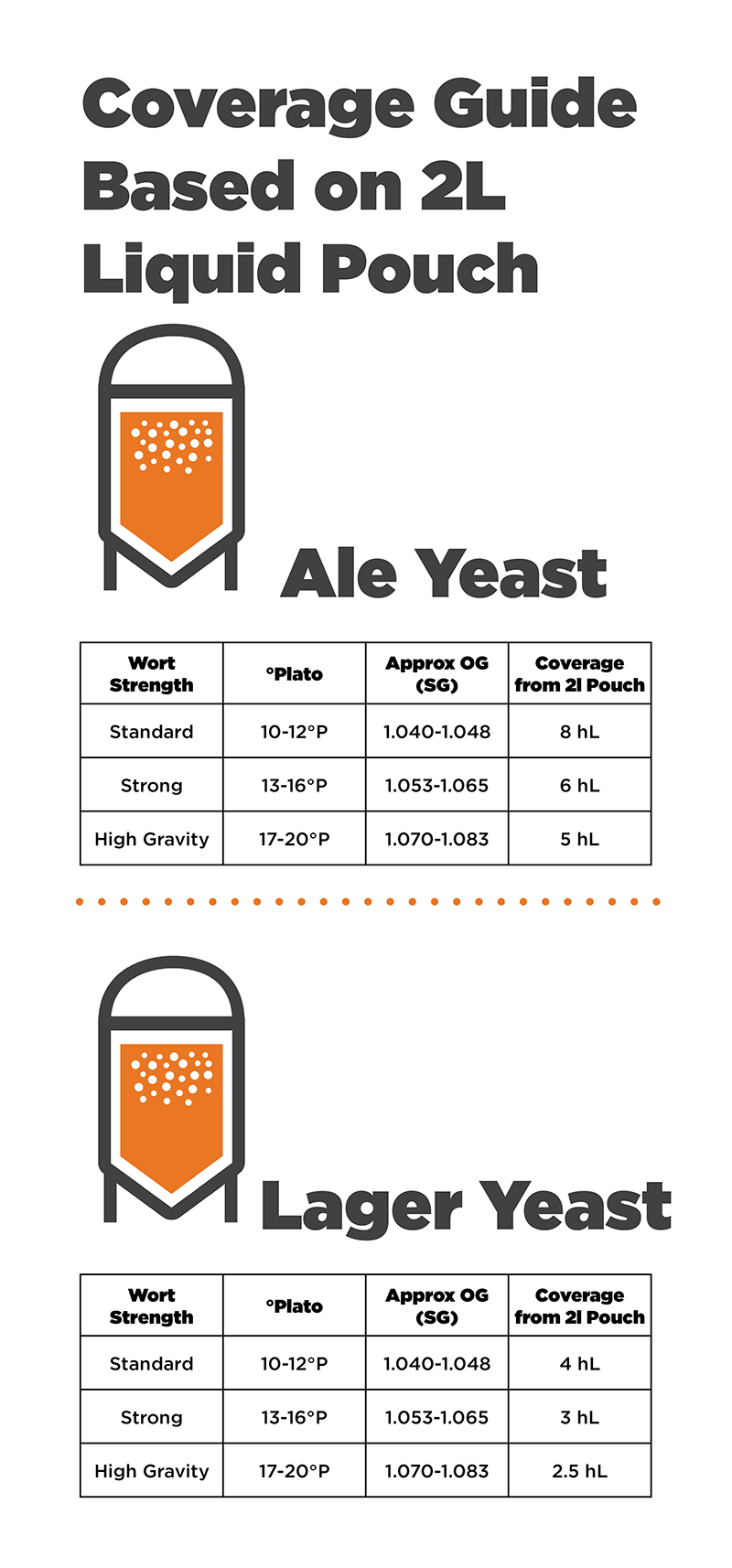
How Far Will 2L of White Labs Liquid Yeast Go?
White Labs Liquid Yeast is Available in 500ml & 2L Pouches
Below is a rough guide for coverage based on one 2L Pouch as a Fresh Pitch:
Ale Yeast
Wort Strength – Standard
Plato: 10-12°P
Approx OG (SG): 1.040-1.048
Coverage for 2L: 8hL
Wort Strength – Strong
Plato: 13-16°P
Approx OG (SG): 1.053-1.065
Coverage for 2L: 6hL
Wort Strength – High Gravity
Plato: 17-20°P
Approx OG (SG): 1.070-1.083
Coverage for 2L: 5hL
Lager Yeast
Wort Strength – Standard
Plato: 10-12°P
Approx OG (SG): 1.040-1.048
Coverage for 2L: 4hL
Wort Strength – Strong
Plato: 13-16°P
Approx OG (SG): 1.053-1.065
Coverage for 2L: 3hL
Wort Strength – High Gravity
Plato: 17-20°P
Approx OG (SG): 1.070-1.083
Coverage for 2L: 2.5hL
Based on fresh yeast at expected viability. Higher gravity beers, colder fermentations, extended storage, or repitched yeast may require adjusted pitching rates. Contact our technical team for assistance.
Using the pitching rate calculator
Before beginning, you need to know:
Batch Size (single brew or multiple brews?)
Original Gravity/Plato
Fermentation temperature - Ale or Lager
Do you plan to harvest and repitch?
Fermentation Temperature
Temperature Affects Pitching Rate
Colder fermentation temperatures require more yeast and a higher pitching rate.
There is less yeast cell growth at colder temperatures during the yeast’s exponential growth phase.
Dissolved Oxygen
Oxygen is necessary for the production of lipids for the yeast's cell wall manufacture.
The correct oxygen ration allows the yeast to be hardy and withstand environmental stresses like pH changes, temperature, gravity, and alchohol.
The optimal dissolved oxygen amount prior to fermentation is 10-14ppm.
Consider buying a DO Meter if you don't already have one in order to accurately monitor oxygen levels.
The Importance of Dissolved Oxygen
Inadequate Dissolved Oxygen
Leads to:
Incomplete fermentations
Off Flavours
Low yeast viability
With the Correct Dissolved Oxygen
Improved cell growth
Improved fermentation rate
Improved attenuation
Minimise cell stress
Controlled flavour compounds
Improved shelf life & storage.
Yeast Nutrition - Nitrogen
Nitrogen
Used for protein production for cell walls components & enzymes
In brewing, nitrogen exists in the form of Free Amino Nitrogen (FAN) or amino acids
100-150ppm FAN is a good nitrogen level
As a general rule, an all-malt wort will usually offer sufficient amino acid content.
High gravity or heavy adjunct brews can require an additional helping hand.
Consider AB Vickers Yeastlife Extra or AB Vickers Yeastlife O
Yeast Nutrition - Minerals
Zinc
A specific co-factor (molecule) for the creation of the crucial alcohol dehydrogenase enzyme
Consider AB Vickers Servomyces
Magnesium
A specific co-factor (molecule) for yeast metabolic enzymes
Calcium
Essential in yeast flocculation pathway
Traces of Manganese & Potassium are also beneficial
Traces of Manganese & Potassium are also beneficial
Harvesting & Repitching
Save Money & Improve Margins by Cropping Yeast
Key Factors in Yeast Harvesting:
Time
Temperature
Strain
Fermenter Style & Shape
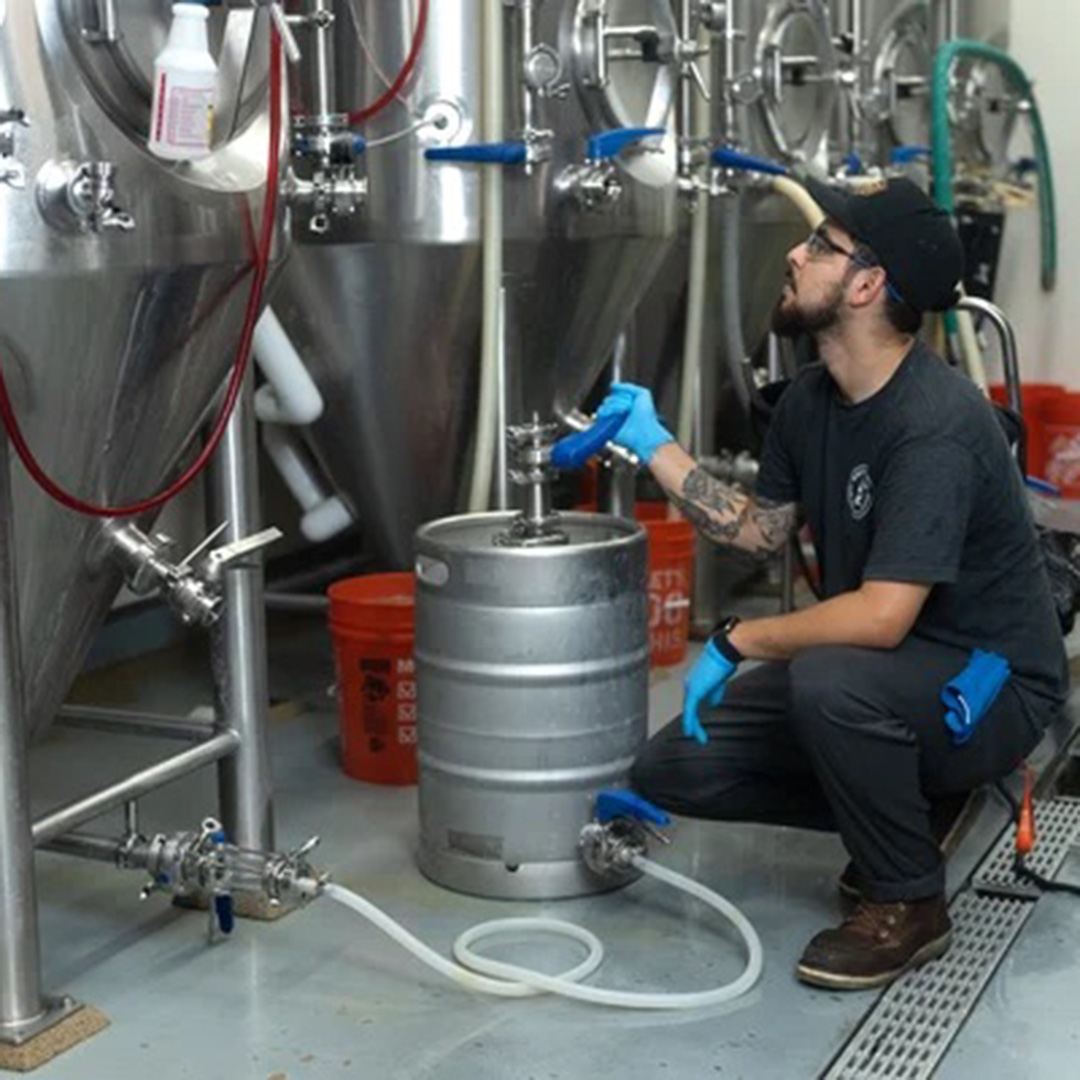
When To Harvest Yeast
As a general rule, aim to harvest at the end of fermentation because:
Depleted sugar sources trigger flocculation
Prolonged exposure post fermentation can be harmful to yeast
Harvesting at this point should leave enough yeast in suspension to aid with conditioning and diacetyl rest.
Yeast Stresses when left too long post fermentation:
Low nutrients
High ethanol environment
Insulation factor in the cone creates 'hot spot' zones & higher temperatures
Hydrostatic pressure in cylindro-conical fermenters prioritises yeast survival over reproduction reducing viability
Depleted sugar sources trigger flocculation
Prolonged exposure post fermentation can be harmful to yeast
Harvesting at this point should leave enough yeast in suspension to aid with conditioning and diacetyl rest.
Yeast Stresses when left too long post fermentation:
Low nutrients
High ethanol environment
Insulation factor in the cone creates 'hot spot' zones & higher temperatures
Hydrostatic pressure in cylindro-conical fermenters prioritises yeast survival over reproduction reducing viability
Low nutrients
High ethanol environment
Insulation factor in the cone creates 'hot spot' zones & higher temperatures
Hydrostatic pressure in cylindro-conical fermenters prioritises yeast survival over reproduction reducing viability
Chilling & Harvest Schedules for Different Yeast Styles
Ales
Cooling: Fermentation temp until Final Gravity, then crash to 4°C.
Yeast Crop: After 2 days at 4°C
Dry Hopped Ales
Cooling: Drop to 16°C, crop yeast, then dry hop for 2 days, crash to 4°C
Yeast Crop: Crop Large volume at 16°C, at 4°C dump remaining yeast & hops.
Hazies (Dry Hopping in Active Fermentation)
Cooling: Fermentation temp until Final Gravity, then crash to 4°C.
Yeast Crop: Crop as much yeast as possible (but not before 50% attenuation). Allow the yeast to ferment out in the harvesting vessel. At 4°C dump remaining yeast & hops.
Lagers
Cooling: At 50% attenuation, allow a diacetyl rest & free rise to 13°C until Final Gravity, chill at 3°C/day
Yeast Crop: Crop at 4°C over 2 consecutive days. Crash to -1°C.
Top Cropping, or Hefeweizen
Cooling: Fermentation temp until Final Gravity, then crash to 4°C.
Yeast Crop: Lightly crop skim a larger volume at high krausen. Allow to ferment in fermenting vessel.
Tip: Cooling intervals should dropped by no more than 3°C at a time to avoid stressing the yeast (apart from when harvesting warm).
Harvesting Yeast - Best Storage Practices
Thoroughly clean & sanitise everything the yeast comes into contact with.
Chill yeast as quickly as possible - between 2 to 4°C.
Keep stored cold, at a constant 4°C in a dedicated container.
Be wary of yeast flocculating & creating hot spots.
Minimise storage time - ideally 1-3 days, generally max of 2 weeks.
Monitor yeast slurry pH (aim for 4.0-5.0 pH).
Avoid oxygen pick-up during storage.
Off-gas stored yeast daily to purge oxygen.
Learn the behaviour of the yeast strain.
Yeast Repitching Methods
Cone-to-Cone
Transfer yeast directly from FV to FV
Minimising risk of contamination
Eliminates need for storage vessel
Stratification of yeast in FV makes accurate cell counts a challenge, & doesn't allow for visual inspection of yeast
From Brink
Transfer from Brink to FV
Visually inspect yeast through eyeglass during transfer
Homogenise yeast to determine slurry concentration
Double Batching
Knock out into a larger FV than your brewhouse
Keeps yeast fresh
Allows for increased production capacity
Does introduce additional pitching varibles
Transfer yeast directly from FV to FV
Minimising risk of contamination
Eliminates need for storage vessel
Stratification of yeast in FV makes accurate cell counts a challenge, & doesn't allow for visual inspection of yeast
From Brink
Transfer from Brink to FV
Visually inspect yeast through eyeglass during transfer
Homogenise yeast to determine slurry concentration
Double Batching
Knock out into a larger FV than your brewhouse
Keeps yeast fresh
Allows for increased production capacity
Does introduce additional pitching varibles
Transfer from Brink to FV
Visually inspect yeast through eyeglass during transfer
Homogenise yeast to determine slurry concentration
Double Batching
Knock out into a larger FV than your brewhouse
Keeps yeast fresh
Allows for increased production capacity
Does introduce additional pitching varibles
Knock out into a larger FV than your brewhouse
Keeps yeast fresh
Allows for increased production capacity
Does introduce additional pitching varibles
The Importance of Yeast Cell Counting
Assess the health of your yeast & Reduce the risk of an incorrect pitch rate
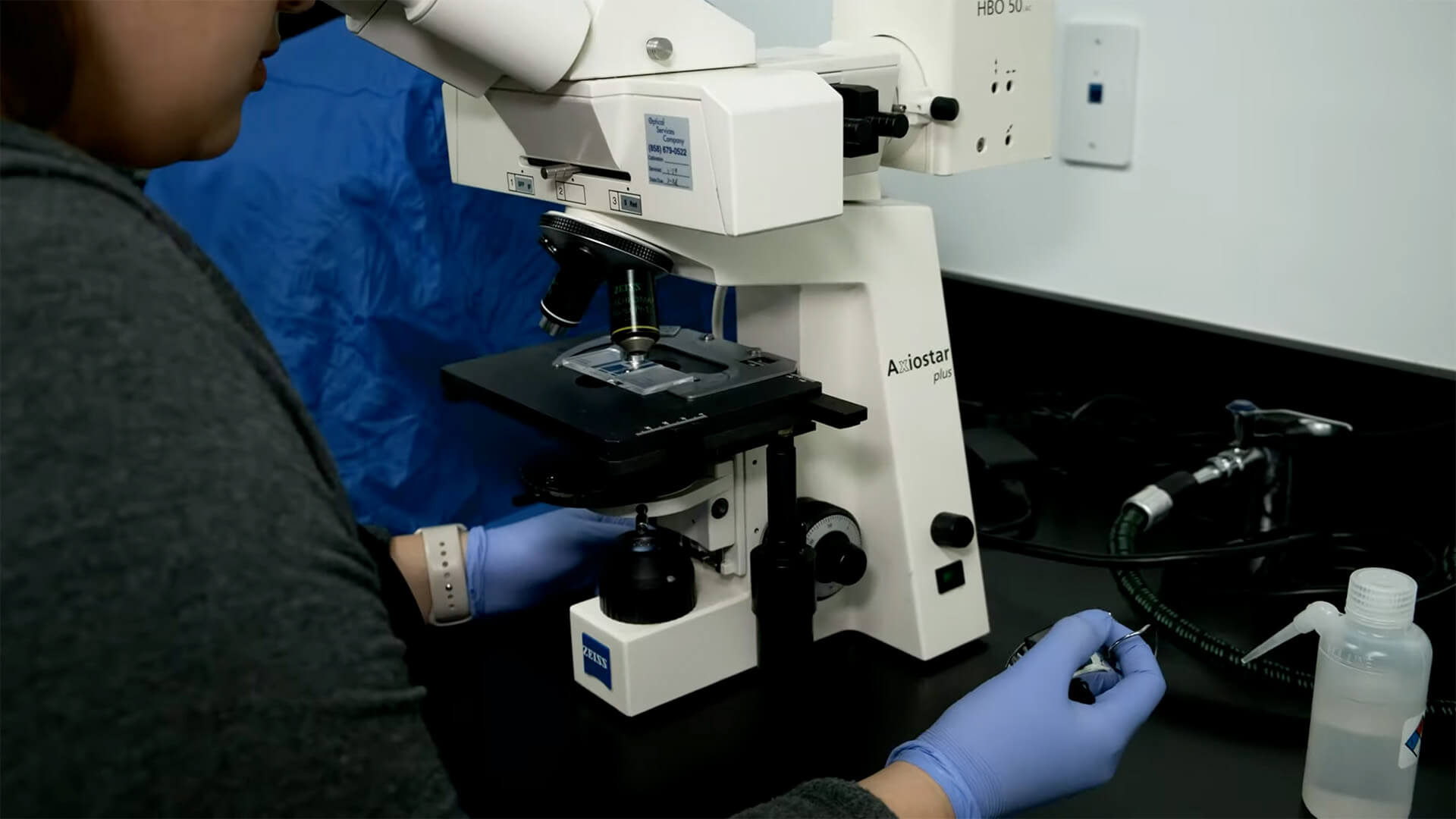
A cell count can take as little as 15 minutes but can save you both time and money by determining the current condition of the yeast culture, and the correct amount of live yeast needed for the next brew.
Read the white labs cell count playbook
Yeast Viability
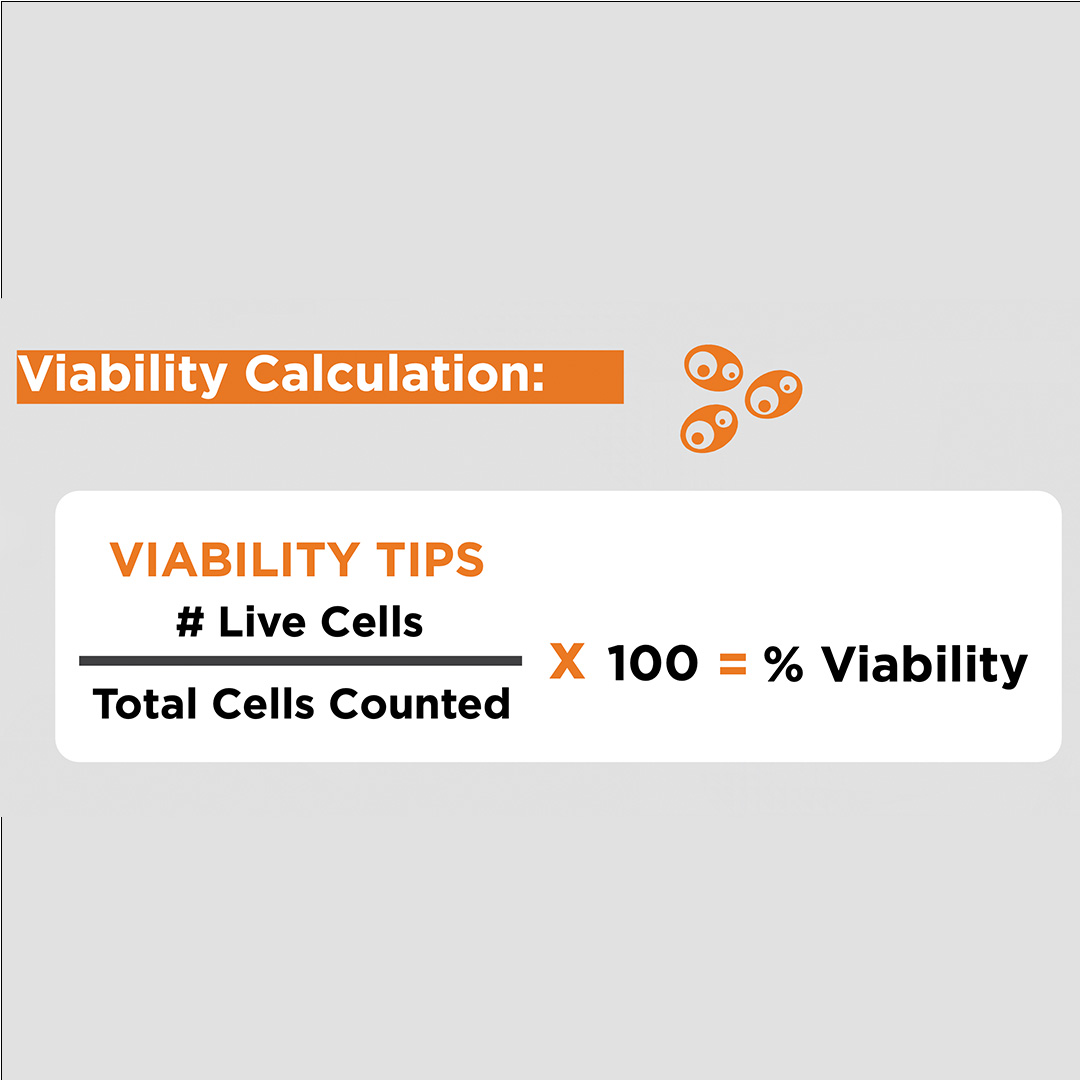
Aim for 85% Viability or Higher when repitching
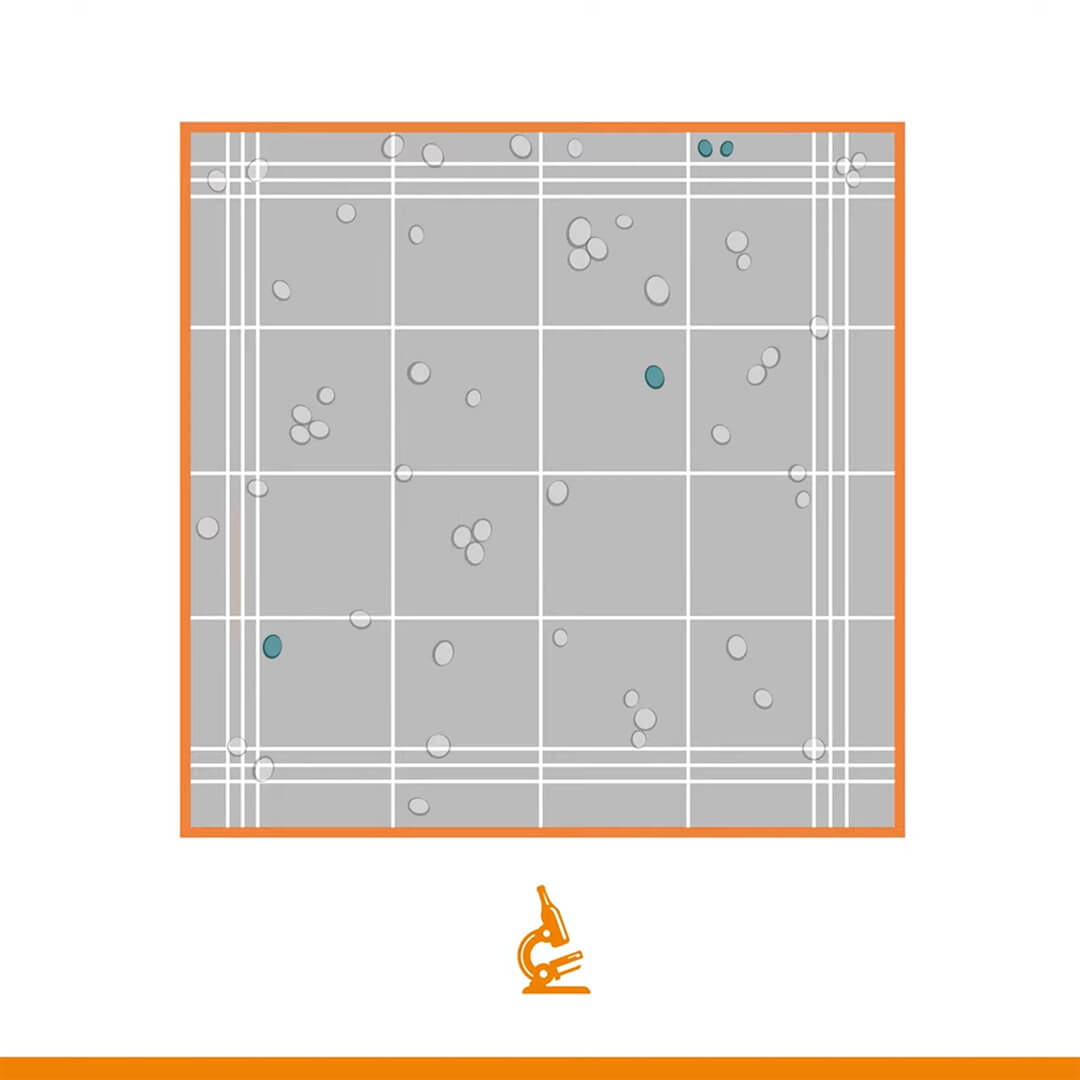
Viability = No. of Live Cells / (Divided By) Total cells counted x 100 = Percentage Viability
Yeast Slurry Concentration:
Number of Live Cells in your 5 squares x 5 (to give the number in the 5 x 5 grid) x Your Dilution Factor x 10,000 (volume in hemocytometer chamber) – Cells/mL Concentration of Yeast Slurry
The Hop Market in 2026
After years of a relative surplus of hops on the spot market, the hop industry is changing. It could be time to rethink your approach to hop contracting. Read more at the link below.